
 en
 日本語
 한국어
 русский


Industry News

8 Rib Stick Umbrellas and 3 Fold, 5 Fold Umbrellas: Supplier Guide
 2026.11.09
 Industry News
Content
- 1 8 Rib Stick Umbrella Manufacturer or 8 Rib Straight Umbrella Factory: What Rib Count Really Changes
- 2 Sizing an 8 Rib Straight Umbrella: Rib Length, Canopy Span and Closed Length
- 3 Strong Stick Umbrella and Sturdy Straight Umbrella: Where Strength Really Comes From
- 4 Automatic Stick Umbrella and Auto Open Stick Umbrella: Mechanism Checks Before You Order
- 5 3 Section Folding Umbrella and 3 Fold Umbrella: Custom, ODM and OEM Projects Explained
- 6 Manual 3 Fold Umbrella and Automatic 3-Fold Umbrella: Choosing the Opening Type
- 7 Custom 5 Fold Umbrella Manufacturer Checklist: What to Know About a Small Folding Umbrella
- 8 Flat 5 Fold Umbrella and Round 5 Fold Umbrella: Choosing a Flat Pocket Umbrella or a 5 Fold Pocket Umbrella
- 9 Sample Inspection for Stick and Folding Umbrella Orders
- 10 Writing an Umbrella Specification Sheet That Suppliers Can Follow
- 11 Shaoxing Shangyu Qianyu Umbrella Co., Ltd.: Umbrella Company Profile
- 12 Stick and Folding Umbrella Formats at a Glance
- 13 Frequently Asked Questions About 8 Rib Stick Umbrellas, 3 Fold and 5 Fold Umbrellas
8 Rib Stick Umbrella Manufacturer or 8 Rib Straight Umbrella Factory: What Rib Count Really Changes
A buyer comparing two stick umbrella quotes notices something odd. Both are listed as 23 inch, yet one opens into a rounder, tauter canopy and the other sags a little between the ribs. The only line on the specification sheet that explains the difference is the rib count, and it is easy to overlook when the rest of the page looks identical.
The short answer is this: an 8 rib stick umbrella gives a balanced mix of canopy shape, weight and rigidity, which is why it is the working standard for everyday straight umbrellas. Move to ten or sixteen ribs when wind behavior matters more than weight, and consider six ribs only when a lighter, more compact build is the priority.
Buyers who search for an 8 rib stick umbrella manufacturer or an 8 rib straight umbrella factory are usually comparing the same four things: rib count, rib length, shaft strength and opening mechanism. In the trade, rib count is often written with the letter K, so 8K means eight ribs, and a full description may read as 23 inch, 8K, manual or automatic. This guide walks through those four points for stick umbrellas, then covers 3 fold and 5 fold umbrellas, sample checks and how to write a specification that any supplier can follow.
Rib count at a glance
Each rib supports the edge of one canopy panel, so rib count decides how many panels the canopy has and how wide each one is. The table below sets out the common options and what they mean for a buyer.
| Common rib counts, the panel angle each one creates and what to watch. | |||
| Rib count | Panel angle | Typical position | What to watch |
| 6 rib | 60 degrees | Lighter, compact builds | Wider panels can sag between ribs |
| 8 rib | 45 degrees | Common standard for stick and 3 fold umbrellas | Rib material and joint quality |
| 10 rib | 36 degrees | Fuller, rounder canopy shape | A little more weight and more joints to inspect |
| 16 rib | 22.5 degrees | Wind-oriented stick designs | Heavier frame and more parts to check |
The panel angle in the table is plain geometry, a full circle divided by the number of ribs. The gauges below turn that into a picture. Each dial runs from 0 to 90 degrees, so a smaller fill means a narrower panel.
The dials show a simple trend. Going from six ribs to eight reduces each panel from 60 degrees to 45, and going to sixteen cuts it to 22.5. Narrower panels mean the fabric is held by a rib closer to every point of the edge, which is why higher rib counts tend to hold a rounder, tauter shape.
For an 8 rib straight umbrella, the 45 degree panel is a practical middle ground. The canopy keeps a clean shape, the frame stays light enough for daily carry, and the number of joints stays manageable during inspection. Sixteen ribs add stiffness against wind, but they also add parts, weight and more places for a defect to hide, so the choice is a trade-off and not an upgrade.
When you speak to an 8 rib stick umbrella manufacturer, confirm the rib count in writing together with the rib length, because a listing that gives only the length can leave the count open to interpretation.
Key takeaway: write rib count and rib length together on every specification, and treat eight ribs as the balanced starting point for a stick umbrella.
Sizing an 8 Rib Straight Umbrella: Rib Length, Canopy Span and Closed Length
Rib length is the number that decides how big an umbrella feels in use. It is quoted in inches across the trade, with 21, 23, 25 and 27 inch lengths appearing most often on straight umbrellas. A common way to write a full specification is rib length, fold count and rib count together, for example 23 inch, straight, 8K.
Before the chart, a note on how it was built. The scatter below estimates the horizontal canopy span from rib length using simple geometry, assuming the ribs sit about 30 degrees below horizontal when the canopy is open. It is a sizing guide for conversations, and a real sample may differ because canopy height varies from model to model.
The points fall on a straight line, which is exactly what the geometry predicts. Each additional two inches of rib length adds roughly nine centimeters to the canopy span, so the jump from a 21 inch to a 27 inch rib is a little over a quarter of a meter.
For a retailer, this makes size choices easier to explain. A 23 inch 8 rib straight umbrella gives a span of about one meter, which suits one adult on a daily commute, while a 27 inch version approaches 120 centimeters and suits customers who want room for a bag or a second person under the edge.
The practical caution is that span and closed length rise together. A longer rib also means a longer closed umbrella and a longer carton, so check how the choice affects display racks and shipping before settling on size.
| Estimated canopy span by rib length, to be confirmed against a physical sample. | ||
| Rib length | Estimated span | Typical use |
| 19 inch | About 84 cm | Compact formats and personal carry |
| 21 inch | About 92 cm | Smaller adult and youth umbrellas |
| 23 inch | About 101 cm | Everyday adult stick umbrella |
| 25 inch | About 110 cm | Wider coverage for commuters with bags |
| 27 inch | About 119 cm | Family coverage and large-canopy programs |
Key takeaway: every two inches of rib length adds roughly nine centimeters of span, so size an 8 rib straight umbrella by customer need and then confirm the figure on a sample.
Strong Stick Umbrella and Sturdy Straight Umbrella: Where Strength Really Comes From
Customers use the words strong and sturdy loosely, but buyers who work with a strong stick umbrella manufacturer or a sturdy straight umbrella factory can turn them into specific checks. A stick umbrella earns its reputation in a gust, and that moment tests four parts in a fixed order: the ribs flex, the joints take the load, the shaft carries it and the handle transfers it to the hand.
Shaft and runner
The shaft is the spine of a straight umbrella. A thicker shaft gives more stiffness, and a few millimeters of diameter, for example 10 millimeters against 8, makes a noticeable difference in the hand. Metal shafts are common, and wall thickness matters as much as diameter. The runner, the sliding piece that moves the stretchers when the canopy opens, should glide without wobble. A runner that rocks side to side usually points to loose tolerances elsewhere.
Ribs and stretchers
Fiberglass ribs flex under load and return to shape, which makes them popular on umbrellas meant for windy conditions. Steel ribs are stiffer and can feel more solid, but they can bend permanently if forced. Stretchers, the shorter arms that link the runner to the ribs, are usually metal and carry much of the opening load, so their thickness and the quality of their pivots deserve attention.
Joints, tips and stitching
Most field failures start at a joint or a rib tip. Check that rib tip caps are firmly seated and that the fabric is stitched securely at each tip, since a loose tip is where a canopy begins to tear. At the top of the shaft, the ferrule and top cap should be fixed firmly, and the join between handle and shaft should not rotate or click under hand pressure.
- Flex a rib by hand and release it, since it should return to shape without a visible bend.
- Grip the shaft and twist the canopy slightly, since play at the runner points to loose tolerances.
- Inspect every rib tip for a secure cap and tight stitching.
- Check that the handle does not rotate on the shaft and the join feels clean.
A strong stick umbrella is rarely the result of one heavy part. It is the result of several parts that match each other in strength, so ask the supplier to name the rib material, shaft material and shaft diameter in writing and compare those figures between samples.
Key takeaway: translate strong and sturdy into named materials, a shaft diameter and hand checks on ribs, joints and tips.
Automatic Stick Umbrella and Auto Open Stick Umbrella: Mechanism Checks Before You Order
An automatic stick umbrella opens at the press of a button, which customers like because it works with one hand and takes less effort than pushing a slider. Closing is normally done by hand, pushing the canopy down against the spring until the lock catches. For a buyer approaching an automatic stick umbrella manufacturer or an auto open stick umbrella factory, the mechanism is where most of the checking should happen.
What is inside
The auto open mechanism combines a spring, a push button, a lock and a sliding runner. When the button is pressed, the lock releases and the spring drives the runner up the shaft, which pushes the ribs outward. Each of these parts has to work smoothly and in the right order, so a rough runner or a weak spring shows up as a canopy that opens slowly, stops short or fails to lock.
Checks on the sample
- Press the button and watch the opening, which should be smooth and reach full extension every time.
- Listen for the lock engaging at both the open and closed positions.
- Close the umbrella by hand and note how much force is needed, since an overly stiff spring is tiring to close.
- Repeat the open and close cycle many times, with several hundred cycles being a sensible benchmark for a sample.
- Check that the button sits flush and returns fully after each press.
Safety and instructions
A spring-driven canopy opens with some force, so packaging and instructions should remind users to point the umbrella away from other people before pressing the button. This is simple guidance and costs nothing to add to a hang tag or inner sleeve, and it reduces complaints from customers who are surprised by how quickly the umbrella opens.
Manual stick umbrellas have fewer parts and fewer things to go wrong, so they suit programs where simplicity matters most, such as loan racks. Automatic stick umbrellas suit retail customers who want convenience, as long as the mechanism has been tested properly before the order is placed.
Key takeaway: on an automatic stick umbrella, test the spring, button and lock through repeated cycles before approving the sample.
3 Section Folding Umbrella and 3 Fold Umbrella: Custom, ODM and OEM Projects Explained
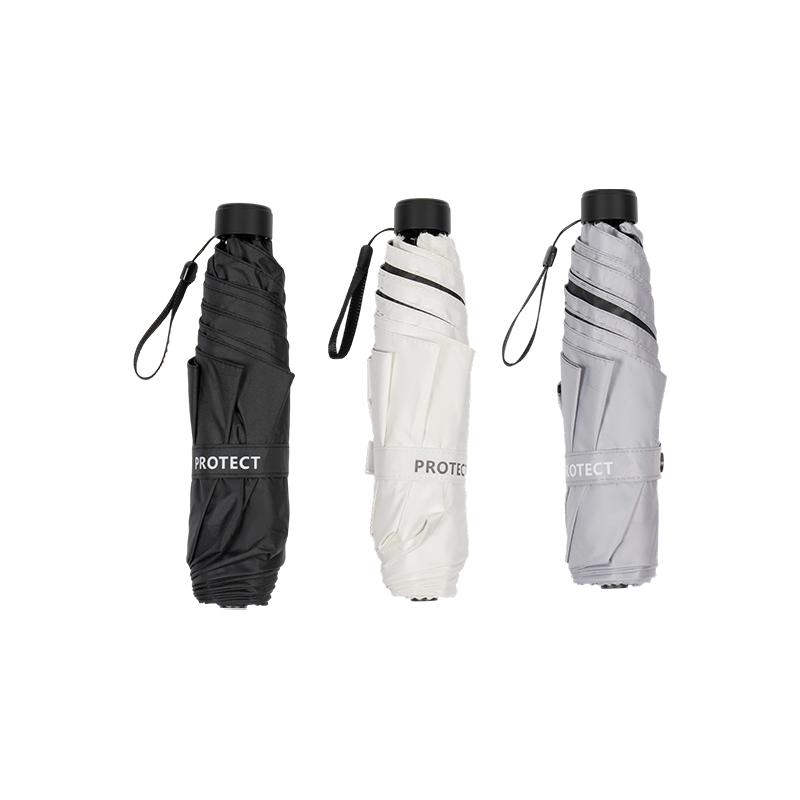
A 3 section folding umbrella, more commonly called a 3 fold umbrella, has a shaft that telescopes into three sections and ribs that fold down alongside it. It closes to a length that fits most handbags and backpacks, which is why it is the everyday standard for compact umbrellas and a frequent choice for gifts and promotions.
When a buyer searches for a custom 3 section folding umbrella manufacturer or an ODM and OEM factory, the first thing to settle is which kind of project this is. The two terms are often confused, so here is the short version.
- OEM: the umbrella is made to the buyer's own design and specification, with the buyer's brand.
- ODM: the umbrella is based on the supplier's existing design, with changes and branding agreed by the buyer.
In practice, many projects sit between the two. A buyer takes a proven 3 fold frame, then changes the canopy print, handle color, case and packaging. Those changes sit on top of an existing structure, so they are quicker to sample and easier to repeat. A project that changes the frame itself, such as a different rib count, a new fold geometry or a different opening mechanism, needs new parts and more sample rounds.
Reading a 3 fold specification
A typical line reads rib length, fold count and rib count together, for example 21 inch, 3 fold, 8K. Add the canopy fabric, the rib and shaft materials, the handle type, the opening type and the closed length. If any of these is missing, the supplier will fill the gap with a default, and the default may not be the one you had in mind.
Where 3 fold umbrellas sell
Three fold umbrellas sell through supermarkets, online stores, gift sets and promotional programs. Their broad appeal comes from a simple balance: a closed length that fits a bag, a canopy large enough for one adult and a frame that is more rigid than a five fold design. For a wholesale range, they often serve as the core model around which color and print variations are built.
Key takeaway: decide whether your 3 fold project is OEM, ODM or a mix, because changes to the frame take longer than changes to print and packaging.
Manual 3 Fold Umbrella and Automatic 3-Fold Umbrella: Choosing the Opening Type
The opening type changes how a 3 fold umbrella feels, how it is tested and who buys it. Companies that supply a manual 3 fold umbrella and companies that supply a custom automatic 3-fold umbrella often serve different customers, even when the canopy and frame look alike. The table below sets the two side by side.
| Manual and automatic 3 fold umbrellas compared by buyer-relevant points. | ||
| Point | Manual 3 fold umbrella | Automatic 3-fold umbrella |
| Opening | Pushed open by hand | Opens by button, closes by button on auto open and close models |
| Moving parts | Fewer, simpler mechanism | More, with spring, button and lock |
| Typical customer | Buyers who value simplicity and a lighter feel | Buyers who want one-handed use |
| Sample test focus | Slider smoothness and lock at both positions | Repeated cycles, button return and spring tension |
| Retail message | Light, simple, dependable | Convenient, quick to use |
Why a manual folding umbrella still sells
A manual folding umbrella has fewer things that can fail, and the absence of a spring makes it a little lighter. Many customers who carry an umbrella in a bag every day prefer that simplicity, and many retailers keep a manual line available for the same reason. When you brief a custom manual folding umbrella factory, focus on the slider, the lock and the fold joints, since these are the parts the customer touches on every use.
Where automatic models fit
An automatic umbrella adds convenience, particularly for customers carrying shopping, a bag or a child. It also adds parts, which is why the cycle test matters. If you stock a range with both opening types, present them clearly on the shelf or product page so customers can see the difference, and avoid describing either as better in general terms, since the right choice depends on how the umbrella will be used.
A practical range plan often pairs one manual and one automatic version of the same frame, sharing canopy prints and color choices. That keeps the catalog simple, lets customers choose by opening type alone and gives the buyer cleaner sales data on which type sells in each channel.
Key takeaway: offer manual and automatic 3 fold versions on the same frame, and test each by the points that matter for its opening type.
Custom 5 Fold Umbrella Manufacturer Checklist: What to Know About a Small Folding Umbrella
A 5 fold umbrella is the compact end of the folding range. The shaft telescopes into five sections, so the closed umbrella is short enough for a small bag, a coat pocket or a desk drawer. For buyers who search for a custom 5 fold umbrella manufacturer or a small folding umbrella factory, the appeal is clear: a small closed size that photographs well, ships efficiently and suits gift and travel buyers.
More folds, more joints
Every extra fold adds a joint, and every joint is a place where wear can appear. Compared with a 3 fold umbrella, a 5 fold design asks more of its hinges, its slider and its spring, so the quality of those parts matters more. This does not mean small folding umbrellas are unreliable. It means the sample check should look harder at the parts that make the compact size possible.
Canopy size and rib count
A small folding umbrella usually has a smaller canopy than a 3 fold or stick umbrella, and a rib count of six or eight depending on design. Be clear with customers about canopy size on the product page. A compact umbrella that covers one person's head and shoulders is a good fit for light rain and sun, and describing it honestly reduces returns from customers who expected more coverage.
What to check on a 5 fold sample
- Open and close the sample many times and look for catching at each telescoping section.
- Check that every section locks firmly and that the shaft does not rattle when open.
- Fold the canopy by hand and look for fabric bunching that prevents the case from closing easily.
- Confirm the unit weight with the case, since compact umbrellas are bought for carry.
A 5 fold umbrella sells well where the closed size is the headline: online stores, travel retail, gift sets and promotional programs aimed at people who carry little. The wholesale conversation should be about folding quality and honest canopy size, since those two points decide whether the customer is satisfied after the first rainy week.
Key takeaway: a 5 fold umbrella is bought for its small closed size, so inspect every telescoping section and describe the canopy size honestly.
Flat 5 Fold Umbrella and Round 5 Fold Umbrella: Choosing a Flat Pocket Umbrella or a 5 Fold Pocket Umbrella
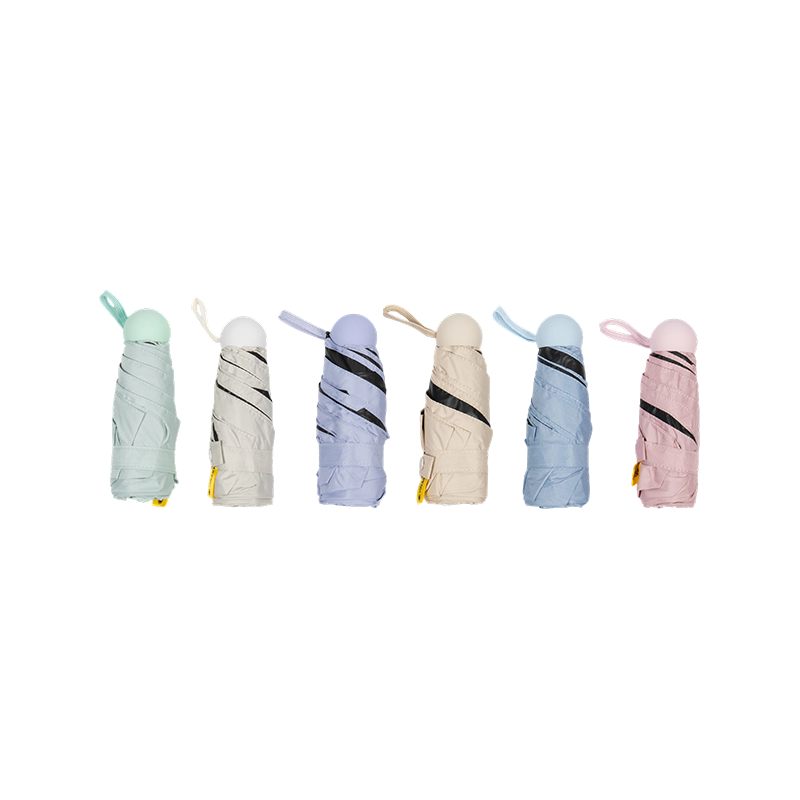
Two shapes dominate the 5 fold category, and they suit different buyers. A flat 5 fold umbrella closes into a slim, flat profile, and a round 5 fold umbrella closes into a rounded, capsule-like shape. A company offering a custom flat 5 fold umbrella or a flat pocket umbrella is usually serving customers who want something close to the thickness of a phone, while a company supplying a round 5 fold umbrella or a 5 fold pocket umbrella serves customers who want a more familiar canopy feel.
| Flat and round 5 fold umbrellas compared for retail and wholesale buyers. | ||
| Point | Flat 5 fold umbrella | Round 5 fold umbrella |
| Closed shape | Slim and flat | Rounded, capsule-like |
| Pocket and bag fit | Slides into slim pockets and sleeves | Fits small bags and larger pockets |
| Case style | Flat sleeve or slim box | Round pouch or tube case |
| Gift and display | Slim gift box, easy to ship flat | Round box or pouch, more shelf depth |
| Sample check focus | Frame thickness and hinge quality | Fold bulk and canopy bunching |
Matching the shape to the customer
A flat pocket umbrella suits commuters, students and travelers who carry a slim bag and want the umbrella to disappear until needed. A round 5 fold umbrella suits buyers who value a familiar look and a slightly larger canopy feel. In a wholesale assortment, offering both lets retail partners cover both customer groups without maintaining two separate suppliers.
Packaging and carton planning
Packaging is a bigger part of the decision for these small formats than for stick umbrellas. A wholesale round 5 fold umbrella order is usually packed in pouches or tubes that need rigid cartons to prevent crushing, while a flat pocket umbrella often ships in slim boxes that stack efficiently. Ask for carton dimensions and units per carton early, and confirm how the inner packaging protects the case during transit.
Whichever shape you choose, keep the written specification, photos of the approved sample and the color reference together. When a repeat order comes up, those three items settle most questions without a new round of sampling.
Key takeaway: choose a flat 5 fold umbrella for slim carry and a round 5 fold umbrella for a familiar canopy feel, and plan packaging for each shape.
Sample Inspection for Stick and Folding Umbrella Orders
Umbrella orders rarely go wrong on the first shipment. They go wrong on the second, when a small change in materials or workmanship slips through and the product no longer matches the sample the customer approved. A short, repeatable inspection plan prevents most of these problems, and the plan should shift its attention depending on the format.
The chart below suggests how to split sample-check effort across four areas for five common formats. It is a planning guide and not measured data, and the idea is simple: the more moving parts a format has, the more of your time should go to the mechanism.
The bars tell a simple story. A manual 8 rib stick umbrella has few moving parts, so the largest share of effort goes to the frame and the canopy, where its strength and appearance are decided. Once the mechanism becomes automatic, the mechanism share rises to around a third, because the spring, button and lock all need repeated testing.
The folding formats shift the balance again. A 3 fold manual umbrella needs balanced attention across frame, canopy and packaging, while the automatic 3 fold and the flat 5 fold pocket umbrella both put at least a quarter or more of the effort on the mechanism and the joints. The flat pocket format also gives packaging a larger share, since slim cases and boxes are easy to damage in transit.
Use the chart as a starting point and adjust it to your own order history. If your last order had a canopy complaint, raise that share for the next one, and if a mechanism problem appeared, raise the mechanism share instead.
- Approve a physical sample and keep it sealed as the reference for production comparison.
- Agree tolerances in the purchase terms, for example plus or minus 1 centimeter on canopy diameter, and a color reference such as a swatch or color code.
- Run a repeated open and close test on samples of every opening type.
- Inspect rib tips, stitching and seams on a defined sample size from each lot.
- Check carton dimensions, units per carton and inner packaging against the agreed specification.
Key takeaway: spend inspection effort where the moving parts are, which means more time on the mechanism as an umbrella becomes automatic or folds more times.
Writing an Umbrella Specification Sheet That Suppliers Can Follow
A clear specification sheet saves more time than any negotiation. It works for an OEM project, an ODM project or an order from an existing range, and it applies to stick umbrellas as well as 3 fold and 5 fold models. The table below lists the items worth writing down and why each one matters.
| Core items for an umbrella specification sheet and why each one matters. | ||
| Item | What to write | Why it matters |
| Format and size | Rib length, fold count and rib count, such as 23 inch, straight, 8K | Fixes canopy size and structure |
| Opening type | Manual, auto open or auto open and close | Decides the mechanism and test plan |
| Frame materials | Rib material, shaft material and shaft diameter | Drives strength and weight |
| Canopy | Fabric type, print file and color reference | Keeps color consistent across lots |
| Handle | Shape, material and color reference | Avoids shade differences between batches |
| Weight and length | Unit weight, closed length and tolerance | Supports product page claims |
| Packaging | Case, inner box, carton size and units per carton | Protects goods and plans freight |
Keep the paper trail
Keep one folder per model with the signed specification, photos of the approved sample, any test reports and the color reference. When a repeat order comes up months later, this folder lets both sides confirm what was agreed without relying on memory. It is a small habit, and it keeps quality steady across lots better than almost any other step in the process.
Key takeaway: a one-page specification with format, opening type, materials, color references and packaging removes most of the guesswork from an umbrella order.
Shaoxing Shangyu Qianyu Umbrella Co., Ltd.: Umbrella Company Profile
Shaoxing Shangyu Qianyu Umbrella Co., Ltd. is a large-scale umbrella company that integrates development, retail (online and offline), and wholesale. The company was established in 2013, starting with e-commerce business and a focus on developing and operating women's small, refreshing umbrellas, and it has kept a product-first approach as the business has grown.
The company is located in Donghua Village, east of Baisong Road, Songxia Street, Shangyu District, Shaoxing City, Zhejiang Province. It supplies wholesale umbrellas, sunshade umbrellas, sunny umbrellas and automatic umbrellas in a wide range of varieties, which sell steadily in the domestic consumer market.
Qianyu works with multiple supermarket and retail partners, including the Forbidden City, Yueshe, Arctic Velvet, Scarecrow, Hengdian Film and Television, Nordic Times and Fangai, and has built cooperative relationships based on credit, adherence to contracts and attention to product quality. With a diversified business profile and an emphasis on quick sell-through, the company has built long-term and stable wholesale partnerships with multiple retailers and agents.
Buyers looking at stick umbrellas, 3 fold umbrellas and 5 fold umbrellas usually want a partner who understands both the product and how it sells. Qianyu combines development with retail and wholesale experience, so it can speak to frame choices, opening types and which formats move in each channel. For custom projects such as a specific rib count, a new opening mechanism or branded packaging, buyers should discuss the scope and timeline with the company directly and confirm the agreed details in writing.
Key takeaway: a company that develops, retails and wholesales umbrellas can advise on both the product and how it sells.
Stick and Folding Umbrella Formats at a Glance
Use this short guide to match a buying goal with a starting format. Each line pairs a need with the umbrella that usually fits it first.
- 8 Rib Stick Umbrellas and Straight Umbrellas: for everyday coverage, store racks, hotel loan programs and family use.
- Strong Stick Umbrellas and Sturdy Straight Umbrellas: for windy sites and customers who value a firm feel.
- Automatic Stick Umbrellas and Auto Open Stick Umbrellas: for convenience-focused retail lines.
- Manual 3 Fold Umbrellas and Automatic 3-Fold Umbrellas: for everyday bag carry, gifts and online stores.
- Flat 5 Fold Umbrellas and Flat Pocket Umbrellas: for slim carry and travel.
- Round 5 Fold Umbrellas and 5 Fold Pocket Umbrellas: for compact carry with a familiar canopy feel.
Key takeaway: start from the buying goal, pick the matching format, then refine by rib count, opening type and packaging.
Frequently Asked Questions About 8 Rib Stick Umbrellas, 3 Fold and 5 Fold Umbrellas
Q1: What is an 8 rib stick umbrella and why is it so common?
An 8 rib stick umbrella is a straight umbrella with eight ribs supporting the canopy, giving a 45 degree panel. It balances canopy shape, weight and rigidity, which is why it is the working standard for everyday straight umbrellas. Ten or sixteen ribs are used when wind behavior matters more than weight.
Q2: Should I choose an automatic stick umbrella or a manual one?
It depends on the customer. Manual stick umbrellas have fewer parts and suit loan racks and simple programs, while an automatic stick umbrella suits retail customers who want one-handed opening. If you choose automatic, test the spring, button and lock through repeated cycles before approving the sample.
Q3: What is the difference between a 3 fold umbrella and a 5 fold umbrella?
A 3 fold umbrella closes to a handbag-friendly length and has a frame with fewer joints. A 5 fold umbrella closes shorter, which suits pockets and small bags, but adds hinge points that deserve a closer look during sample checks. Flat and round shapes are both available in the 5 fold category.
Q4: What is the difference between OEM and ODM for custom umbrellas?
OEM means the umbrella is made to the buyer's own design and specification. ODM means the umbrella is based on the supplier's existing design, with agreed changes and branding. Changes to print, color and packaging are usually quicker than changes to the frame or mechanism, so confirm the scope and timeline in writing.

Contact Us
-
Add:
On the east side of Baisong Road in Songyuan District, Shaoxing City, Zhejiang Province -
Phone:
+86-18457587893 -
Email:
grace@qyumbrella.com
Send Inquiry
To Contact Us
Copyright © Shaoxing Shangyu Qianyu Umbrella Co., Ltd. All Rights Reserved.
