
 en
 日本語
 한국어
 русский


Industry News

Straight, Folding, Beach and Garden Umbrellas Wholesale Guide
 2026.11.09
 Industry News
Content
- 1 Straight Umbrellas, Folding Umbrellas, Beach Umbrellas and Garden Umbrellas: Matching Each Type to Its Job
- 2 Straight Umbrellas: Where a Long Shaft Still Makes Sense
- 3 Folding Umbrellas for Everyday Carry and Retail Shelves
- 4 Beach Umbrellas: Wind, Sand and Sun Protection at the Shoreline
- 5 Garden Umbrellas: Sizing, Bases and Patio Planning
- 6 Comparing Straight, Folding, Beach and Garden Umbrellas by Scenario
- 7 Canopy Fabric, UV Coating and Frame Materials Explained for Buyers
- 8 What Wholesale Buyers Should Check Before Ordering Umbrellas
- 9 Planning an Umbrella Assortment for Online and Offline Retail
- 10 Common Umbrella Defects and How to Catch Them Early
- 11 About Shaoxing Shangyu Qianyu Umbrella Co., Ltd.
- 12 Browse Umbrella Categories by Need
- 13 Frequently Asked Questions About Straight, Folding, Beach and Garden Umbrellas
Straight Umbrellas, Folding Umbrellas, Beach Umbrellas and Garden Umbrellas: Matching Each Type to Its Job
Picture a shop owner on a wet Monday morning. The first customer asks for something that fits inside a handbag, the second wants a canopy wide enough for two people walking to school, and a café owner across the street is asking about shade for a terrace that gets full sun after noon. One storefront, three different needs, and none of them is solved by the same umbrella.
The short answer is this: folding umbrellas suit carry and gifting, straight umbrellas suit coverage and wind, beach umbrellas suit portable sun shelter, and garden umbrellas suit fixed outdoor seating. Most retailers, agents and hospitality buyers end up needing a mix of straight umbrellas, folding umbrellas, beach umbrellas and garden umbrellas, with the proportions depending on climate, customer type and sales channel.
This guide is written for people who buy umbrellas in volume: retailers, e-commerce sellers, distributors, hotel and café operators, and gift or promotion buyers. It explains how each of the four types is built, where each one performs well, which specifications deserve attention, and which questions are worth putting to a wholesale umbrella supplier before a purchase order is signed. Along the way you will find four charts and three tables that turn the main points into something you can screen at a glance.
A note on how to read the numbers. Umbrella specifications vary widely from model to model, so the ranges shown here are typical planning ranges seen across the category, not a measured sample of any single product line. Always confirm final dimensions, materials and tolerances against the sample and the written specification for the exact model you plan to order.
The four types in one paragraph each
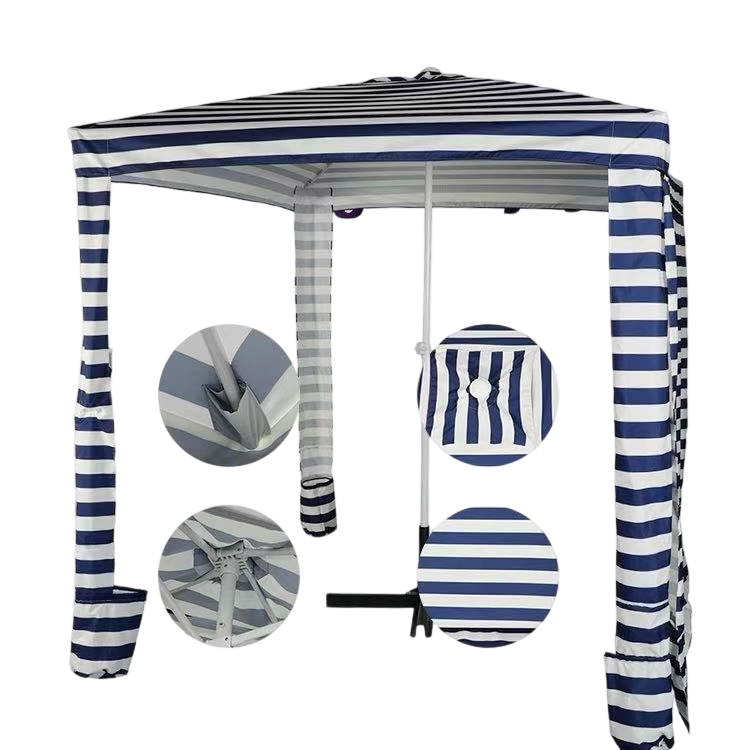
Straight umbrellas have a single-piece shaft and a long closed profile. They offer a larger canopy, fewer moving joints and a sturdier feel in gusty rain. Folding umbrellas collapse in two, three or five sections, trading some structural simplicity for a closed length that fits a bag. Beach umbrellas are built around a long pole that is pushed or screwed into sand, with a vented or tilting canopy and, in many models, a UV-resistant coating. Garden umbrellas are larger again, designed for patios, terraces and poolside seating, and they depend on a weighted or fixed base to stay upright.
Each of the next sections takes one type at a time, then the article moves to side-by-side comparison, materials, ordering checks, assortment planning and quality control.
Key takeaway: treat the four umbrella types as four separate jobs, and plan your assortment around the jobs your customers actually have.
Straight Umbrellas: Where a Long Shaft Still Makes Sense
Straight umbrellas remain a steady seller for one simple reason: the structure is easy to trust. With no folding joints along the shaft, the force of wind on the canopy travels down one continuous piece of metal, so the umbrella tends to feel firmer in the hand than a compact model of similar canopy size. For commuters, parents on school runs, hotel lobbies and office reception desks, that firm feel is the main reason people choose them.
Frame and shaft
Most straight umbrellas on the wholesale market use eight ribs, although sixteen-rib versions exist for wind-focused designs. Rib length is often described in inches, with 23-inch and 27-inch ribs being common labels, and the longer rib gives a wider canopy and a longer closed length. Ribs are typically fiberglass, steel or a combination. Fiberglass flexes under load and returns to shape, which suits windy conditions, while steel feels more rigid but can bend permanently if forced. The shaft is usually steel or aluminum, and a thicker shaft diameter generally improves stiffness at the cost of a little extra weight.
Handle and opening mechanism
Handles fall into two broad families. Hooked J handles hang over an arm or a chair back and are the familiar choice for adult umbrellas. Straight handles, often rubberized or molded, look cleaner on a display stand and are comfortable for longer walks. On the opening side, manual umbrellas have fewer parts that can fail, while automatic umbrellas open with a button and are popular because customers can use them with one hand. Automatic models have more internal components, so the spring, slider and lock mechanism are worth testing during sample approval.
Where straight umbrellas sell well
- Supermarkets and convenience stores that want a visible, space-efficient umbrella stand near the entrance.
- Hotels, offices and venues that keep a rack of loan umbrellas for guests.
- Promotional and gift programs where a large canopy gives room for a printed logo or pattern.
- Family and school-run customers who value coverage for two people over a compact closed length.
One practical point for buyers: straight umbrellas take more carton volume per unit than compact models, so freight planning and warehouse shelving should be considered when you decide how many straight umbrellas to hold. A wholesale umbrella supplier who can quote carton dimensions and units per carton early in the conversation saves a good deal of back-and-forth later.
Key takeaway: straight umbrellas are the dependable choice for coverage and wind, and the sample test should focus on rib flex, shaft stiffness and the automatic mechanism.
Folding Umbrellas for Everyday Carry and Retail Shelves
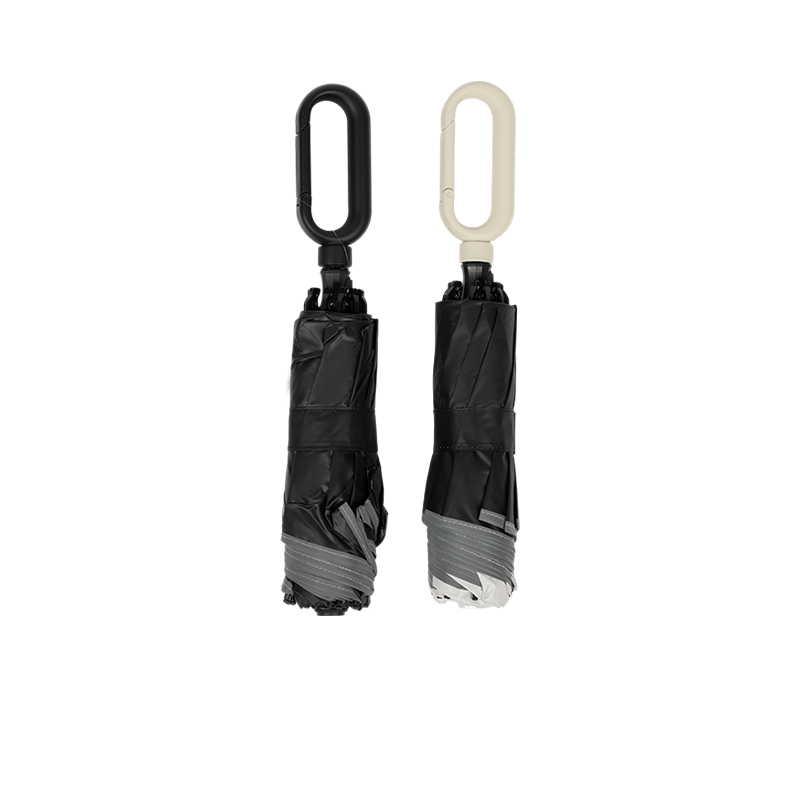
Folding umbrellas are the category most closely tied to online sales and gift buying. They arrive in small boxes, photograph well, fit into a bag and can be sold in many colors and prints without taking much storage space. Small, light and refreshing designs aimed at women have been a core part of the e-commerce umbrella market for years, and the same compact formats also serve students, travelers and office workers.
Two-fold, three-fold and five-fold
The number of folds decides how short the umbrella becomes. A three-fold umbrella is the everyday standard, closing to a length that fits most handbags and backpacks. A five-fold umbrella is shorter again, which suits small bags and travel pouches, but each additional fold adds hinge points. More hinges mean more places where wear can show up after many open and close cycles, so five-fold models deserve a closer look at joint quality and spring tension. Two-fold umbrellas are less common but offer a sturdier feel for buyers who want a compromise between straight and compact.
Automatic open and close
Automatic open and close is one of the most requested features in folding umbrellas. Customers like the single-button operation, especially when carrying a bag or a child in the other hand. The tradeoff is the same as with straight automatic models: a more complex mechanism with a slider, spring and lock that all need to work together. When assessing samples, open and close the umbrella repeatedly, listen for catching or grinding, and check that the lock engages cleanly in both positions.
Closed length, a number worth comparing
Before looking at the chart below, here is the context. Closed length is one of the simplest ways to compare umbrella types, because it affects how the product is carried, packed, stocked and displayed. The chart places the closed length of all four types on one scale so you can see why folding umbrellas and garden umbrellas rarely compete for the same customer.
The chart shows a clear split. Three-fold and five-fold folding umbrellas close to roughly a quarter to a third of a meter, which is why they dominate handbag, travel and gift use. Straight umbrellas close to somewhere around a meter, which is comfortable to carry by hand but not by bag. Beach umbrellas and garden umbrellas sit far to the right, because the pole itself is the main structural element and has to be long enough to anchor in sand or sit in a base.
For a retailer, the practical reading is that folding umbrellas and straight umbrellas can share a shelf or an online category, while beach umbrellas and garden umbrellas usually need floor space, a separate seasonal display or a dedicated product page with larger photography. A supplier that carries all four types can help you plan these categories together instead of sourcing them from different places with different packaging standards.
The chart also helps with logistics. Shorter closed lengths allow more units per carton, which changes how you plan container loads and warehouse bays. When you request a quotation or a sample, ask for closed length, canopy diameter, weight and carton size together, so the numbers can be compared on the same sheet.
Key takeaway: folding umbrellas win on portability, so judge them on closed length, joint quality and the open and close mechanism.
Beach Umbrellas: Wind, Sand and Sun Protection at the Shoreline
A beach umbrella has a harder job than a rain umbrella. It has to stay planted in loose sand, handle steady coastal wind, and give shade for hours instead of minutes. The design priorities are therefore different: a long and sturdy pole, a way to anchor it, a canopy that lets wind pass through, and a fabric that limits UV transmission.
Anchoring and pole design
Beach umbrellas are usually anchored by pushing the pole into sand, and many models add a screw-style sand anchor or a pointed tip to help it bite. The pole is often built in two or three sections so it packs down into a carry bag, and the joints are where quality differences show up. A loose telescoping joint will wobble in gusts, so check how firmly the sections lock and whether the collar tightens evenly. Tilt mechanisms let the user angle the canopy as the sun moves, which is a feature customers notice and often ask for.
Canopy vents and shape
A vented canopy has a flap or opening near the top that lets air escape instead of lifting the whole umbrella like a sail. Valances or skirts around the edge add a little extra shade and give room for printed patterns. Sizes commonly range from compact models for one or two people to wider canopies for a family spot, and canopy diameter should be matched to the target customer instead of simply choosing the largest option.
Understanding UPF ratings
Ultraviolet protection factor, or UPF, describes how much UV passes through a fabric. A fabric rated UPF 50 allows roughly one fiftieth of UV through, which is about 2 percent, while a UPF 30 fabric allows roughly one thirtieth, about 3.3 percent. The rating system is used in several markets, for example under the Australian and New Zealand standard AS/NZS 4399. Buyers who list UPF claims should ask the supplier for the test report that supports the number, and should word product descriptions carefully, since a rating describes the fabric and not the whole experience of sitting at the beach.
Here is a small chart to make the rating easier to picture. Both rings below show the same idea, how much UV a fabric blocks and how much it transmits, for two common rating levels.
At a glance the two rings look almost identical, and that is the first lesson: both ratings block the large majority of UV that reaches the fabric. The difference is in what gets through, since moving from UPF 30 to UPF 50 reduces transmitted UV from about 3.3 percent to about 2 percent, a cut of roughly 40 percent in what reaches the person underneath.
For beach umbrellas and sunshade umbrellas sold through wholesale channels, this means a higher UPF rating is a meaningful but modest step, and fabric weave, coating and canopy size all contribute to real-world comfort. Reflected light from sand and water also reaches the user from below and the sides, so a canopy reduces direct exposure but does not replace other sun care habits. Product pages that explain this honestly tend to earn more trust than pages that simply print a large number.
If you sell sunny umbrellas and sunshade umbrellas alongside rain models, the same UPF reasoning applies to compact folding umbrellas that carry a UV coating, which is one reason many retailers group beach umbrellas and sun-protective folding umbrellas in a single summer campaign.
Key takeaway: for beach umbrellas, check anchor design, pole joints, canopy venting and a documented UPF test report before choosing a model.
Garden Umbrellas: Sizing, Bases and Patio Planning
Garden umbrellas are bought for places, not for people. A terrace, a poolside deck, a restaurant courtyard or a hotel patio each has a table layout, a sun path and a wind exposure, and the umbrella has to fit all three. That is why sizing and base selection decide whether a garden umbrella is a quiet success or a repeated complaint.
Center pole or offset design
Center-pole garden umbrellas are the traditional format, with the pole passing through a table or standing in a base beside it. They are simpler in structure and suited to most café and patio tables. Offset or cantilever garden umbrellas hold the canopy to one side of a side-mounted pole, which keeps the area under the canopy free of a central post. Offset designs work well over lounge seating and sun loungers, but they need a heavier base and a sturdier frame because the load sits off-center.
Lift system, tilt and base
Larger canopies are heavy, so most garden umbrellas use a crank handle or a pulley system instead of a push-up slider. A tilt function lets the user adjust the canopy angle as the sun moves. Base weight depends on canopy size and wind exposure, and manufacturer guidance for canopies in the two-and-a-half to three meter range typically calls for a base measured in tens of kilograms, not a few. Commercial buyers should always read the base recommendation for the specific model, and should consider fixed or ground-anchored options where the umbrella stays in place all season.
Canopy size and shaded area
Choosing a diameter is easier when you can see how fast the covered area grows. The next chart uses simple geometry to show the circular area directly below the canopy for common diameters. It is a planning aid that reflects the canopy straight overhead.
The curve rises faster than many buyers expect, because area grows with the square of the radius. Moving from a 2.0 meter canopy to a 3.0 meter canopy more than doubles the area directly below, from about 3.1 square meters to about 7.1 square meters, while the diameter only grows by half.
That relationship is useful when you advise hospitality customers. A four-seat café table often sits comfortably under a mid-size canopy, while a larger lounge group may call for a 3.5 meter canopy or a pair of smaller garden umbrellas placed side by side. Larger canopies also catch more wind, so every step up in diameter should come with a matching step up in base weight, pole strength and rib quality.
Real shade is not a perfect circle under the canopy, since the sun moves through the day and the shadow shifts and stretches. A garden umbrella supplier can help match diameter to your seating plan, but it is good practice to mark out the table and chair footprint on the ground and compare it with the canopy size before ordering for a commercial space.
Key takeaway: choose garden umbrella size from the seating layout and wind exposure, then match the base weight and pole strength to that canopy.
Comparing Straight, Folding, Beach and Garden Umbrellas by Scenario
Choosing between umbrella types is easier when the question is framed as a scenario instead of a product. A commuter, a beach visitor and a café owner will each rank the same four options in a different order. The table below gathers the main attributes of straight umbrellas, folding umbrellas, beach umbrellas and garden umbrellas in one place.
| Side-by-side comparison of the four umbrella types, typical planning values only. | ||||
| Type | Typical use | Portability | Wind behavior | Retail angle |
| Straight umbrellas | Commute, school run, hotel and office loan racks | Carried by hand | Firm feel from a single shaft | Supermarket stands, promotional programs |
| Folding umbrellas | Handbag, travel, gifting, online sales | Fits in a bag | More joints, so frame quality matters | Online stores, gift sets, counter displays |
| Beach umbrellas | Shoreline, park and camping shade | Carry bag, long pole | Needs a firm anchor and vented canopy | Seasonal summer displays |
| Garden umbrellas | Patio, terrace, poolside, café seating | Placed and left in position | Depends on base weight and pole strength | Hospitality and outdoor furniture buyers |
The table captures what each type does, but not how well it fits each situation. The heatmap that follows turns that into a qualitative rating, based on typical use patterns rather than measured data. Darker cells mean a stronger fit.
The pattern in the heatmap is easy to read. Each type has one or two columns where it clearly leads, and none of the four covers every scenario. Folding umbrellas show the broadest strength, which explains why they are so common in online stores and gift programs.
Straight umbrellas lead the commute column and keep a moderate position for retail display, since a rack of straight umbrellas is a familiar sight at store entrances. Beach umbrellas and garden umbrellas each own a single scenario, which is a reminder that they are specialist items. A buyer who stocks beach umbrellas for a summer season and garden umbrellas for hospitality customers is serving two separate audiences.
For a wholesaler building a catalog, the useful reading is to fill each scenario column with at least one strong option, then add variety within each type through colors, canopy sizes and handle styles. That approach keeps the range easy to explain to retail partners and agents.
Key takeaway: no single umbrella type covers every scenario, so build the range so that each scenario has one clear, strong option.
Canopy Fabric, UV Coating and Frame Materials Explained for Buyers
When two umbrellas look alike on a product page, the difference is often in the fabric and the frame. These details also drive many of the complaints that appear in reviews, such as water seeping through seams, fading colors, bent ribs or a coating that peels. Knowing the vocabulary helps you ask better questions of any umbrella supplier.
Canopy fabric
Polyester pongee is the most widely used umbrella fabric because it dries quickly, takes print well and holds its shape. Nylon is lighter and slightly more flexible, and appears in some compact models. Fabric density is often described with a number followed by T, such as 190T or 210T, which refers to threads per square inch. A higher number generally means a tighter weave, which can help with water resistance and the feel of the canopy, though the finish and coating also play a part.
UV coating
Sunshade umbrellas and sunny umbrellas rely on a coating applied to the underside of the canopy. Black and silver coatings are common. The coating reduces the amount of UV and visible light that passes through, and the thickness and evenness of the application affect both performance and durability. Uneven coating can show up as patches, and a coating that is too thin may wear after repeated folding. Request a test report for any UPF claim and inspect the coating on an opened canopy under bright light.
Frame and ribs
The table below summarizes common materials and what each one means for the buyer. It is a guide for questions to ask, and individual products will vary.
| Common umbrella materials and the buyer questions that go with them. | |||
| Component | Common material | Strength | Question to ask |
| Canopy | Polyester pongee | Quick drying, good print results | What thread density and finish is used? |
| Canopy underside | Black or silver UV coating | Reduces UV and light transmission | Is there a UPF test report for this fabric? |
| Ribs | Fiberglass, steel or mixed | Flex and recovery, or rigidity | How do ribs behave when bent against the wind? |
| Shaft and pole | Steel or aluminum | Stiffness and weight balance | What is the shaft diameter and wall thickness? |
| Handle | Plastic, rubberized or wood-look finish | Grip and appearance | How is the handle attached to the shaft? |
One common source of disappointment is a mismatch between the product page and the sample. If a listing says fiberglass ribs, a coated underside or a certain thread density, confirm each claim on the physical sample and in writing before approving production. This small step prevents most disputes later.
Key takeaway: fabric, coating and rib material explain most of the quality gap between similar-looking umbrellas, so verify each one against the sample.
What Wholesale Buyers Should Check Before Ordering Umbrellas
A wholesale umbrella order is rarely lost on the first shipment because of a design flaw. It is usually lost on the second one, when a small change in materials or workmanship slips through and the product no longer matches the sample the customer liked. The checklist below is built to prevent that outcome and applies equally to straight umbrellas, folding umbrellas, beach umbrellas and garden umbrellas.
- Request a full written specification covering canopy diameter, closed length, weight, rib count, rib material, shaft diameter and fabric description.
- Approve a physical sample and keep it sealed as the reference for production comparison.
- Agree a tolerance in the purchase terms, for example plus or minus 1 centimeter on canopy diameter, and a color reference such as a swatch or a color code.
- Test the mechanism by opening and closing a sample repeatedly, and consider a defined cycle test, with several hundred cycles being a reasonable internal benchmark for a sample.
- For wind-oriented models, flex the ribs by hand and check the stitching and the rib tips and joints.
- Ask for UPF or other test reports when a product page will make a UV claim, and keep those reports on file.
- Confirm packaging type, polybag or sleeve, inner box and outer carton, plus carton dimensions and units per carton.
- Agree on a pre-shipment inspection method, including sample size and what counts as a defect.
Order quantity and assortment flexibility
Retailers and agents often prefer mixed assortments, with several colors or prints in one order, so they can test what sells before committing deeper. When you speak to a supplier, ask how color and style mixing works within one order and how repeat orders are handled when a color sells out. A supplier with both retail and wholesale experience tends to understand these questions well, since the same company has watched sell-through from the shelf side.
Packaging and presentation
Presentation matters more for folding umbrellas, which are often sold as gifts or through online stores where the unboxing experience is part of the product. A sturdy sleeve, a neat carry case and clear labeling reduce returns caused by damage in transit. For beach umbrellas and garden umbrellas, the carton must protect long poles and joints, and the carry bag or base should be labeled clearly so customers know what is included.
Keep communication simple: one written specification, one sealed sample, one agreed inspection method. Buyers who follow that three-part routine generally find that disagreements about quality become short conversations instead of long disputes.
Key takeaway: a written specification, a sealed reference sample and an agreed inspection method protect every repeat order.
Planning an Umbrella Assortment for Online and Offline Retail
Umbrella demand follows the weather and the calendar, so assortment planning is mostly timing. Rain umbrellas move when the wet season approaches, sun-protective umbrellas move when temperatures rise, and beach umbrellas and garden umbrellas peak in the weeks before the outdoor season. Planning stock around these windows makes better use of both warehouse space and cash flow than buying evenly across the year.
Online sales
For online stores, folding umbrellas and compact sunshade umbrellas are the natural core. Clear photos of the opened canopy, the closed umbrella next to a familiar object for scale, and the underside coating help customers decide. Listings should state canopy diameter, closed length, weight and opening type in the first lines, because these are the questions that otherwise generate messages and returns. Women's small and refreshing styles, with light colors and compact handles, remain a strong niche, and a seller who can offer several prints in the same frame reduces inventory complexity.
Offline retail
In physical stores, visibility drives sales. A stand of straight umbrellas near the entrance on a rainy day, a countertop display of folding umbrellas at the register and a seasonal beach umbrella display near summer goods each work for a different reason. Supermarket and gift-store buyers often care about shelf footprint and packaging as much as the umbrella itself, so ask your supplier about display-friendly packaging and hang-tag options.
Hospitality and project buyers
Hotels, cafés and event venues buy differently. They look for garden umbrellas in consistent colors, replacement canopies that fit existing frames, and bases that suit their floor surfaces. For these customers, availability of spare parts and canopy replacements often matters as much as the original product, so confirm early whether replacement canopies and parts can be supplied for the model you choose.
- Spring and early summer: sunshade umbrellas, sunny umbrellas, compact folding umbrellas with UV coating.
- Early summer: beach umbrellas and garden umbrellas, ahead of holiday and outdoor dining season.
- Rainy season: straight umbrellas and automatic folding umbrellas for commuters and families.
- Gift seasons: boxed folding umbrellas in coordinated colors and prints.
Whatever the channel, start from a small number of reliable core models and add variety through color and print. This keeps quality checks simple and gives you cleaner sales data for the next reorder.
Key takeaway: plan umbrella stock by season and channel, with a few reliable core models and variety added through color and print.
Common Umbrella Defects and How to Catch Them Early
Most umbrella complaints trace back to a handful of repeatable issues. They are easy to spot when you know where to look, and much harder to fix after goods have shipped. The table below lists the defects that show up most often across straight, folding, beach and garden umbrellas, with the likely cause and a quick check.
| Frequent umbrella defects, likely causes and early checks. | ||
| Defect | Likely cause | Early check |
| Automatic button sticks | Weak spring or rough slider | Open and close repeatedly during sample approval |
| Rib tip tears the canopy | Thin tip cap or loose stitching | Inspect rib tips and stitching at each rib end |
| Water seeps through seams | Needle holes without sealing | Spray test on a sample and look at the seam lines |
| UV coating flakes or patches | Uneven application or thin layer | Inspect the underside in bright light and fold repeatedly |
| Beach pole wobbles | Loose telescoping joint or collar | Extend fully and apply side load by hand |
| Garden umbrella tilts in a base | Base too light for the canopy size | Compare base weight against the model recommendation |
| Color differs from sample | Dye lot variation | Compare production samples against the sealed reference |
A few of these defects deserve extra attention. Rib tip and stitching problems usually appear after the first strong gust, which makes them expensive for retailers because the umbrella fails in front of the customer. Seam leakage tends to be noticed by customers within the first few uses. Coating issues take longer to appear, which is why a repeated fold test is worth including in the routine.
Build the checks into the order process instead of treating them as an afterthought. A short inspection sheet, shared with your supplier before production starts, gives both sides the same reference and turns quality from a negotiation into a routine.
Key takeaway: most umbrella defects can be caught with simple hand and visual checks on a sample, before the order is produced.
About Shaoxing Shangyu Qianyu Umbrella Co., Ltd.
Shaoxing Shangyu Qianyu Umbrella Co., Ltd. is a large-scale umbrella company that integrates development, retail (online and offline), and wholesale. The company was established in 2013, starting with e-commerce business and a focus on developing and operating small, refreshing umbrellas for women, and it has kept a product-first approach as the business has grown.
The company is located in Donghua Village, east of Baisong Road, Songxia Street, Shangyu District, Shaoxing City, Zhejiang Province. From there it supplies wholesale umbrellas, sunshade umbrellas, sunny umbrellas and automatic umbrellas in a wide range of varieties, which sell steadily in the domestic consumer market.
Qianyu works with multiple supermarket and retail partners, including the Forbidden City, Yueshe, Arctic Velvet, Scarecrow, Hengdian Film and Television, Nordic Times and Fangai, and has built cooperative relationships based on credit, adherence to contracts and attention to product quality. With a diversified business profile and an emphasis on quick sell-through, the company has built long-term and stable wholesale partnerships with multiple retailers and agents.
For buyers who want to cover several scenarios from one source, this combination of retail experience and wholesale supply is useful. A company that has operated online stores and offline channels understands how straight umbrellas, folding umbrellas, beach umbrellas and garden umbrellas actually move, which colors and sizes repeat, and where the questions from end customers tend to come from. That practical view helps when you are choosing models, planning seasonal assortments or building a first order for a new channel.
Key takeaway: a supplier with both retail and wholesale experience can advise on products and on how they sell.
Browse Umbrella Categories by Need
Use the short guide below to match your buying goal with the right starting category. Each line pairs a need with the umbrella type that usually fits it first.
- Straight Umbrellas: for store entrance racks, hotel and office loan umbrellas, and family or school-run coverage.
- Folding Umbrellas: for online stores, gift sets, travel and everyday bag carry.
- Beach Umbrellas: for seasonal summer displays, shoreline shops and outdoor leisure customers.
- Garden Umbrellas: for cafés, hotels, patios and outdoor furniture buyers.
Key takeaway: start from the buying goal, pick the matching category, then refine by canopy size, fabric and packaging.
Frequently Asked Questions About Straight, Folding, Beach and Garden Umbrellas
Q1: Which is better for a retail store, straight umbrellas or folding umbrellas?
Most stores benefit from stocking both. Straight umbrellas suit entrance racks and customers who want a larger canopy and a firm feel in wind, while folding umbrellas suit gift buyers, travelers and online shoppers who want something that fits in a bag. The right mix depends on your customer base and how much display space you have.
Q2: What should I look for in beach umbrellas?
Check the anchoring method, the strength of the pole joints, whether the canopy has a vent to release wind, and whether a tilt function is included. If the product page mentions a UPF rating, ask for the supporting test report, and describe the benefit in careful terms instead of making broad claims.
Q3: How do I choose the right size for garden umbrellas?
Start with the seating layout. Mark the table and chair footprint on the ground and compare it with the canopy diameter, remembering that shade moves with the sun. Then match the base weight and pole strength to the canopy size and wind exposure, and follow the base recommendation for the specific model.
Q4: What should I confirm with a wholesale umbrella supplier before ordering?
Ask for a written specification, approve a sealed reference sample, agree tolerances for size and color, request test reports for any UV claims, confirm packaging and carton details, and set an inspection method before shipment. Having these items in writing makes repeat orders smoother for both sides.

Contact Us
-
Add:
On the east side of Baisong Road in Songyuan District, Shaoxing City, Zhejiang Province -
Phone:
+86-18457587893 -
Email:
grace@qyumbrella.com
Send Inquiry
To Contact Us
Copyright © Shaoxing Shangyu Qianyu Umbrella Co., Ltd. All Rights Reserved.
