
 en
 日本語
 한국어
 русский


Industry News
 Home / News / Industry News / Custom Umbrella Manufacturer Guide: Lightweight, Beach and Patio Umbrellas
Custom Umbrella Manufacturer Guide: Lightweight, Beach and Patio Umbrellas
 2026.11.09
 Industry News
Content
- 1 Custom Umbrella Manufacturer or Lightweight Umbrella Wholesale Factory: Which Route Fits Your Order?
- 2 Lightweight Umbrella Design: What Light Really Means for Buyers
- 3 Straight-Handle Umbrella Wholesale Supplier Checklist for Stick Umbrellas
- 4 Lightweight Folding Umbrella and Mini Folding Umbrella: What a Supplier Should Show You
- 5 Outdoor Beach Sun Umbrella Supplier Guide: Beach Parasol Features That Matter
- 6 Beach Gazebo-Style Umbrella Canopy and Beach Canopy: Stability Before Style
- 7 Outdoor Patio Umbrella and Garden Sun Umbrella: Sizing, Bases and Supplier Questions
- 8 Custom Straight, Folding, Beach and Garden Umbrellas: How to Brief a Supplier
- 9 Choosing Between Umbrella Formats: Coverage, Carry and Carton Space
- 10 Sampling and Quality Checks for Wholesale Umbrella Orders
- 11 Shaoxing Shangyu Qianyu Umbrella Co., Ltd.: Umbrella Supplier and Company Profile
- 12 Umbrella Categories at a Glance
- 13 Frequently Asked Questions About Custom Umbrellas and Lightweight Umbrella Wholesale
Custom Umbrella Manufacturer or Lightweight Umbrella Wholesale Factory: Which Route Fits Your Order?
A retail buyer opens her spring order sheet and finds three problems waiting for her. Customers described last season's mini umbrella as flimsy in wind, a beach canopy leaned over after a full day at the shore, and one batch of straight-handle umbrellas arrived with handles in two slightly different shades of navy. None of these problems comes from a bad idea. They come from an order that was not specific enough about weight, wind and color control for each umbrella format.
The short answer is this: decide first whether your project needs a new design or an assortment from an existing range, then set separate checks for each format. If you only need your own colors, prints and packaging, a wholesale umbrella supplier with a ready range is usually the quicker route. If you need a new frame, a new folding mechanism or a new canopy structure, you are in custom umbrella manufacturer territory, and you should plan for development time, repeated samples and a clear written specification before any production starts.
Buyers search for a custom umbrella manufacturer, a lightweight umbrella wholesale factory or a long-term umbrella supplier with slightly different goals in mind. The table below separates the three most common routes so you can see what each one gives you and what to watch for.
| Three common sourcing routes for umbrella orders and what each one suits. | |||
| Route | Best suited to | What you control | Main watch-out |
| Custom umbrella manufacturer project | New frame, mechanism or canopy structure | Design, materials, specification | Longer development and sampling cycle |
| Wholesale umbrella supplier with a ready range | Fast assortments with own colors, prints and packaging | Model choice, color mix, labeling | Limited change to the base structure |
| Development and wholesale company with retail experience | Buyers who want product advice tied to how umbrellas sell | Range planning and seasonal timing | Confirm in writing what can be adapted |
This guide covers the formats that appear most often in umbrella sourcing: straight-handle umbrellas, lightweight folding umbrellas, mini folding umbrellas, beach umbrellas, beach canopies and patio umbrellas. Each section gives the practical points that matter at the sampling and ordering stage, and three charts turn the main trade-offs into something you can read at a glance.
One note on numbers. Umbrella dimensions and weights vary from model to model, so every range here is a typical planning value and not a measured sample of a specific product. Confirm final figures against the physical sample and the written specification of the exact model you plan to order.
Key takeaway: choose the sourcing route by how much of the umbrella you need to change, then write a separate specification for each format.
Lightweight Umbrella Design: What Light Really Means for Buyers
A lightweight umbrella is easy to describe and surprisingly easy to misjudge. Customers pick one up in a shop and feel the weight immediately, yet product pages often describe it with a single adjective and no number. The practical answer is that a lightweight umbrella is the result of several small choices in ribs, shaft, fabric and handle, and each choice affects strength as well as weight.
Where the weight comes from
Four parts account for most of the weight in any umbrella. The shaft and runner carry the load of the opening mechanism, the ribs and stretchers form the frame, the canopy fabric covers the area, and the handle and ferrule finish the piece. Fiberglass ribs are lighter than steel and flex rather than bend, aluminum shafts weigh less than steel ones, and a thinner pongee fabric weighs less than a heavier weave. The trade-off is that thinner parts tolerate less abuse, so a lightweight umbrella needs good tolerances in the joints to stay reliable.
Weight is a specification, not a feeling
When you speak to a lightweight umbrella supplier, ask for unit weight in grams on the approved sample, not just on a brochure. Weigh the umbrella with its sleeve or case, and without it, so you know what a customer will carry. If you plan to list the weight on a product page, state how it was measured and keep the sample weight on file, because later production lots can drift slightly if the materials change.
Light but not fragile
The goal is to avoid the common complaint that a light umbrella feels like a toy. Buyers can check three simple things by hand. First, flex a rib gently and release it, since it should return to shape without a visible bend. Second, grip the shaft and twist the canopy slightly, since a wobbling runner points to loose tolerances. Third, open and close the umbrella several times, since a mechanism that feels smooth at the first try may still catch after a dozen cycles.
- Ask for the weight with and without the sleeve or carry case.
- Request the rib material and shaft material in writing, since these drive both weight and durability.
- Keep one sealed reference sample so later lots can be compared against it.
- Do not describe an umbrella as lightweight on a listing unless you can state the measured weight.
For women's compact umbrellas, school use and travel, a lightweight build is often the first thing customers mention in reviews, which is why this attribute deserves a number on the sheet and a check on the sample.
Key takeaway: treat a lightweight umbrella as a measured specification with a sealed reference sample, not as a marketing adjective.
Straight-Handle Umbrella Wholesale Supplier Checklist for Stick Umbrellas
Straight-handle umbrellas, also called stick umbrellas or straight umbrellas, are the format that most people picture when they hear the word umbrella. They are popular with supermarkets, hotels, offices and families because the single-piece shaft gives a firm feel and the canopy is generous. For a buyer working with a straight-handle umbrella wholesale supplier or a stick umbrella factory, the questions are mostly about consistency across large lots.
Rib length and canopy size
Straight umbrellas are usually described by rib length in inches, with 21-inch, 23-inch and 27-inch ribs being common labels. A longer rib gives a wider canopy and a longer closed length. A 23-inch size suits adults on a daily commute, while 27-inch versions suit families and customers who want extra coverage. Eight ribs is the usual count, and sixteen ribs appears on models designed to hold their shape better in wind.
Handle consistency
The scenario at the start of this article, two shades of navy on one order, is a handle problem. Handles are often molded or finished separately from the canopy, and the color can vary between batches. Agree a color reference, such as a swatch or a color code, and write it into the purchase terms. Check the attachment as well: the handle should not rotate on the shaft, and the join between handle and shaft should be clean to the touch.
Manual or automatic opening
Manual straight umbrellas have fewer parts and are less likely to fail, while automatic models open with a button and are popular with customers who want one-handed use. If you stock automatic stick umbrellas, spend extra time on the mechanism during sample approval, since the spring, slider and lock all need to work together.
- Store entrance racks and promotional umbrella programs that need a large printed canopy.
- Hotels, offices and venues that lend umbrellas to guests.
- Family and school-run customers who value coverage over a short closed length.
Straight umbrellas take more carton space per unit than compact models, so ask for carton dimensions and units per carton early. This changes how many you can hold in a warehouse and how freight is planned, and a clear answer at the start saves time later.
Key takeaway: for straight-handle umbrellas, lock down rib length, handle color and the opening mechanism in the written specification.
Lightweight Folding Umbrella and Mini Folding Umbrella: What a Supplier Should Show You
Folding umbrellas drive much of the online umbrella trade, and a lightweight folding umbrella supplier is often asked for two things at once: a very small closed size and a canopy that still covers a person. A mini folding umbrella factory can deliver the first quickly, but the second depends on frame quality, which is where buyers need to look carefully.
Three-fold and five-fold formats
A three-fold umbrella is the everyday standard and closes to a length that fits most handbags and backpacks. A five-fold umbrella, often called a mini folding umbrella, closes shorter again and suits small bags, pockets and travel pouches. Each extra fold adds hinge points. More hinges mean more places where wear can appear after repeated use, so five-fold models deserve a closer look at joint tolerance and spring tension.
Automatic open and close
Automatic open and close is one of the most requested features in compact umbrellas. The tradeoff is a more complex mechanism, so test it on the sample by opening and closing it repeatedly, listening for catching or grinding, and checking that the lock engages cleanly. A mechanism that works smoothly on the first day is a good sign, but a repeated cycle test gives a better picture.
Comparing the three formats at a glance
Before looking at the chart, here is how to read it. The radar below compares a mini folding umbrella, a lightweight three-fold umbrella and a straight-handle umbrella on six buyer-relevant attributes. The scores are qualitative ratings from 1 to 5 based on typical designs, not measured data, so use them as a conversation starter and not as a test result.
The shapes tell a clear story. The mini folding umbrella reaches far on portability and carton efficiency, which explains why it fits online stores, gift sets and travel counters, but it sits lower on wind stability and mechanism simplicity because of the extra hinges. The straight-handle umbrella leans the other way, with strong coverage, wind behavior and mechanical simplicity, at the cost of carry convenience.
The lightweight three-fold sits between the two and is the format that tends to balance the attributes, which is why it often serves as the core model in a retail range. For a buyer, the practical reading is to match the format to the customer: mini folding for pockets and gifts, three-fold for everyday bags, straight-handle for coverage and wind.
A mini folding umbrella factory or a lightweight folding umbrella supplier can help you decide which attribute to prioritize, but it is worth asking for joint and mechanism details on every sample, since those are the parts the radar cannot show.
Key takeaway: the smaller the closed size, the more attention the hinges, springs and automatic mechanism deserve on the sample.
Outdoor Beach Sun Umbrella Supplier Guide: Beach Parasol Features That Matter
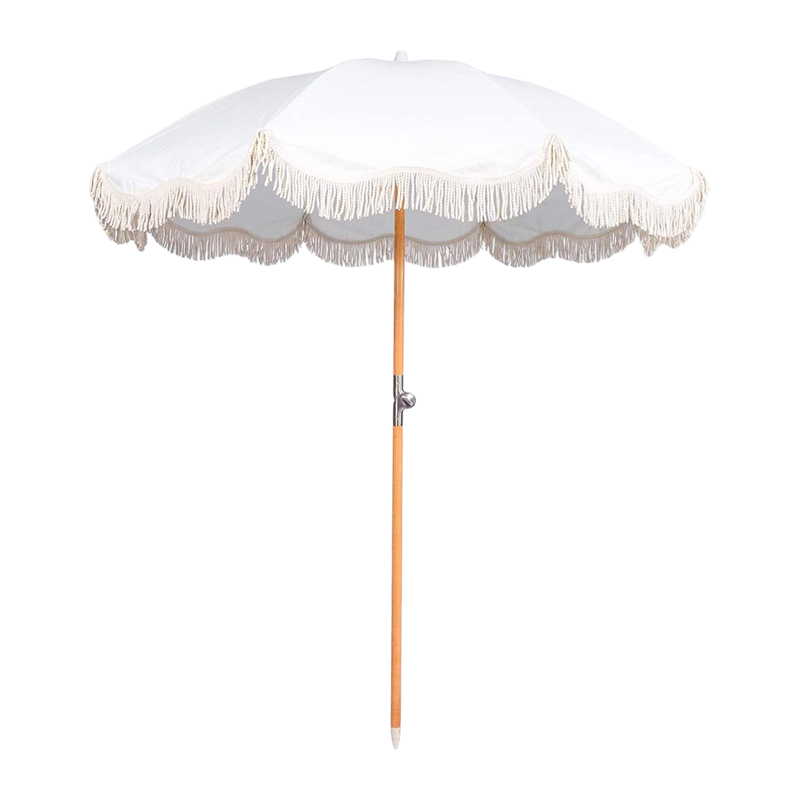
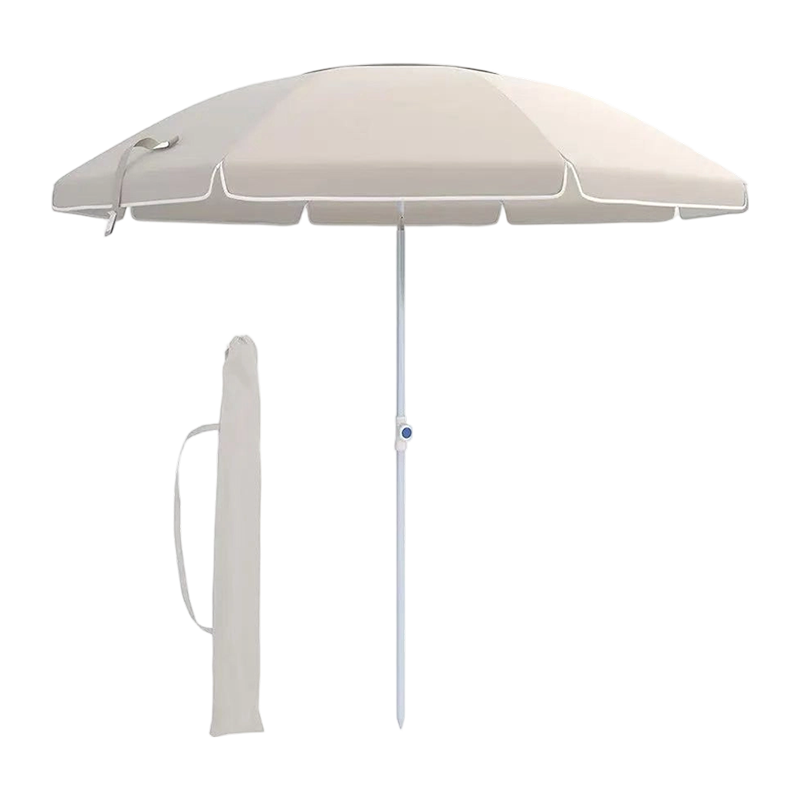
A beach umbrella has a harder job than a rain umbrella. It has to stay planted in loose sand, face steady coastal wind and provide shade for hours. When a buyer works with an outdoor beach sun umbrella supplier or a custom beach parasol factory, the conversation should start from these conditions and not from the canopy print.
Pole, anchor and tilt
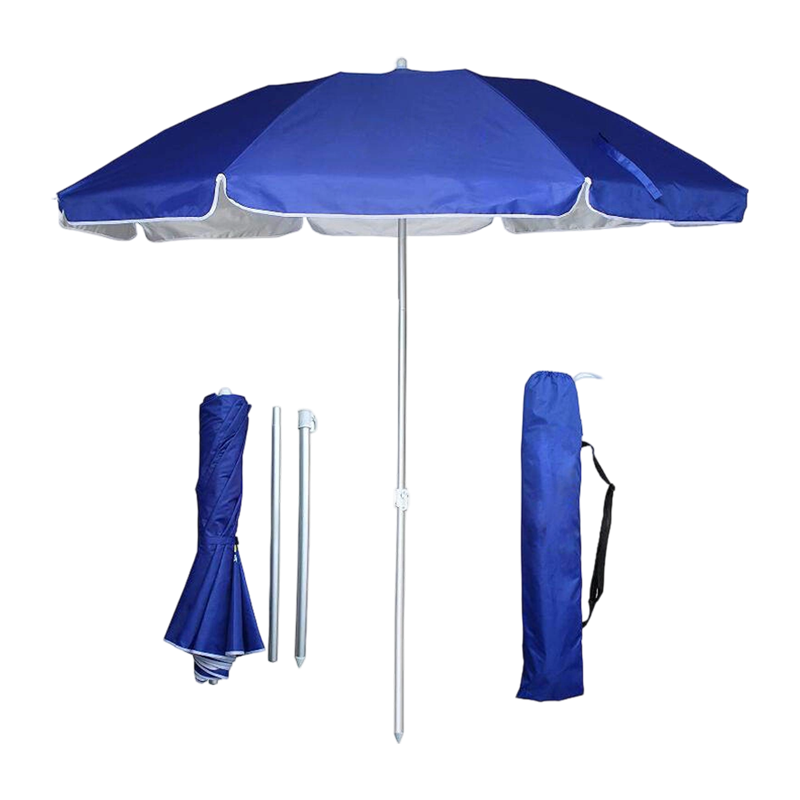
Most beach parasols are anchored by pushing the pole into sand, and many add a pointed tip or a screw-style anchor to help it bite. The pole is often built in two or three sections to fit a carry bag, and the joints are where quality differences appear. A loose telescoping joint wobbles in gusts, so check how firmly each section locks and whether the collar tightens evenly. A tilt mechanism lets users angle the canopy as the sun moves, and customers often notice and ask for it.
Vented canopy and valance
A vented canopy has an opening near the top that lets air escape instead of lifting the umbrella like a sail. Valances around the edge add a little extra shade and give room for prints. Sizes range from compact canopies for one or two people to wider ones for a family spot, and the right diameter depends on the target customer instead of simply choosing the largest option.
UV protection claims
Ultraviolet protection factor, or UPF, describes how much UV passes through a fabric. A UPF 50 fabric lets through roughly one fiftieth of UV, about 2 percent, and the rating system is used in several markets, for example under the Australian and New Zealand standard AS/NZS 4399. If a product page makes a UPF claim, ask the supplier for the test report that supports it. Word the claim carefully, since the rating describes the fabric and not the whole experience of sitting on a beach where sand and water reflect light from below.
- Confirm how the pole sections lock and whether the collar tightens evenly.
- Check that the canopy has a vent and that stitching around it is reinforced.
- Ask for a UPF test report before listing any UV protection claim.
- Confirm that a carry bag and anchor are included and labeled clearly.
Beach umbrellas also sell best when the display explains these features. A short card that shows the sand anchor, the vent and the tilt joint helps customers understand why one model feels different from another.
Key takeaway: for a beach parasol, the anchor, pole joints and canopy vent matter more than the print on the canopy.
Beach Gazebo-Style Umbrella Canopy and Beach Canopy: Stability Before Style
A beach gazebo-style umbrella canopy, usually called a beach canopy, is a different kind of product from a beach umbrella. It is a shelter with a frame and a roof, sometimes with side panels, designed to shade a group of people and their belongings. A beach canopy supplier or beach canopy factory is therefore handling a structure, and the main question becomes how well that structure stays put in wind.
Why wind matters so much
The force of wind on a surface grows with the square of wind speed. In plain terms, when the wind doubles, the push on the canopy roughly quadruples. This is a physics relationship, and it explains why a canopy that feels stable in a light breeze can lean or lift when the wind picks up. The chart below shows the relative wind load on a fixed canopy shape at five wind speeds, with the load at a light breeze set to one.
The curve bends upward sharply, and that bend is the point of the chart. Moving from a light breeze to a fresh breeze triples the wind speed but multiplies the load by nine, and a near gale places roughly twenty-five times the load of a light breeze on the same canopy. The wind descriptions below the axis follow the standard Beaufort scale used in weather reporting.
For a beach canopy, this means anchoring and frame stiffness should be judged at the higher end of the curve, not at the gentle end. Stakes, sandbags and guy lines are the usual tools, and a well-designed canopy gives clear anchor points at each leg. Open vents in the roof, when the design includes them, release some of the pressure instead of letting the roof act as a sail.
Buyers who list a beach canopy should write usage guidance that is honest about wind, such as advising customers to take the canopy down when conditions become strong. That kind of guidance protects customers and reduces returns, and it positions the product as a considered piece of beach gear.
What to check on a beach canopy sample
- Frame joints and leg locks, which should engage firmly without play.
- Anchor points for stakes, sandbags and guy lines, and whether those accessories are included.
- Roof fabric weight, stitching quality and the presence of vents.
- Packed size and weight, since customers carry the canopy across sand.
Key takeaway: because wind load rises with the square of speed, judge a beach canopy by its anchoring and frame stiffness, not only by its size.
Outdoor Patio Umbrella and Garden Sun Umbrella: Sizing, Bases and Supplier Questions
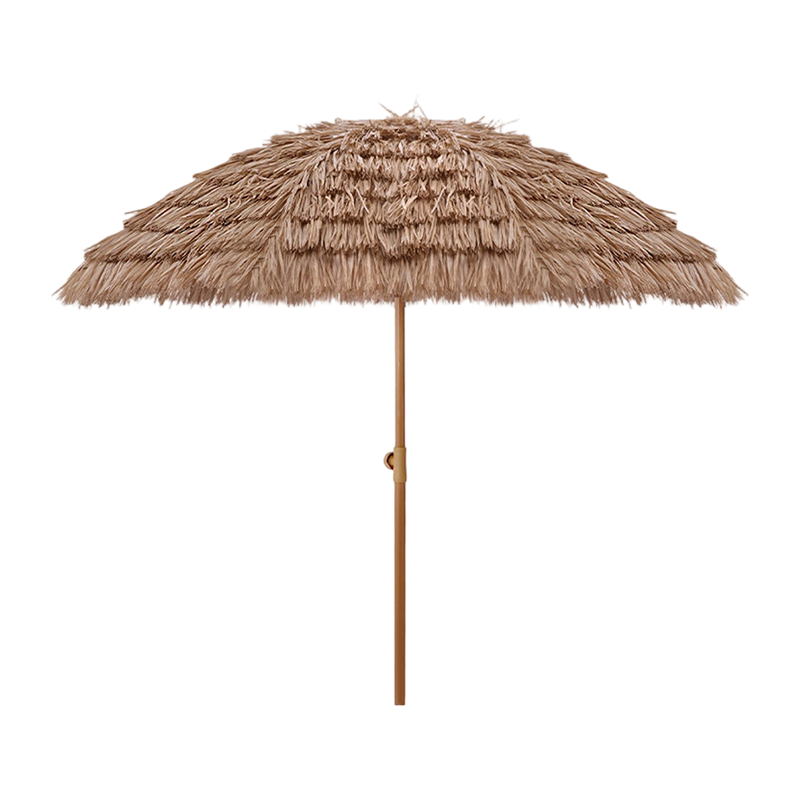
Patio umbrellas are bought for places, not for people. A terrace, a poolside deck, a café courtyard or a hotel garden each has its own table layout, sun path and wind exposure. When you work with an outdoor patio umbrella supplier or a custom garden sun umbrella factory, the first thing to share is the space itself, because the umbrella has to fit it.
Center pole or offset design
Center-pole garden sun umbrellas are the traditional format, with the pole passing through a table or standing in a base beside it. They are simpler in structure and suit most café and patio tables. Offset umbrellas hold the canopy to one side of a side-mounted pole, which keeps the area under the canopy free of a central post. Offset designs suit lounge seating and sun loungers, but they need a heavier base and a stronger frame, because the load sits off-center.
Lift system, tilt and base
Larger canopies are heavy, so most patio umbrellas use a crank handle or a pulley system instead of a push-up slider. A tilt function lets users adjust the canopy as the sun moves. Base weight depends on canopy size and wind exposure, and manufacturer guidance for canopies in the two-and-a-half to three meter range typically calls for a base measured in tens of kilograms. Commercial buyers should read the base recommendation for the specific model and consider fixed or ground-anchored options where the umbrella stays in place for the season.
Fabric and replacement parts
Hospitality buyers care about color consistency across many umbrellas and about replacement canopies that fit existing frames. Ask early whether replacement canopies and parts can be supplied for the model you choose, and whether the canopy fabric is treated for UV exposure, since patio umbrellas stay outdoors for long periods. Fade resistance and seam quality are the points where long-term satisfaction is decided.
- Measure the table and chair footprint before choosing the canopy diameter.
- Match base weight and pole strength to the canopy size and the wind exposure of the site.
- Confirm that replacement canopies and parts can be supplied.
- Ask how the canopy fabric is treated against fading and UV exposure.
Real shade moves through the day, so a canopy larger than the table gives a margin as the sun changes angle. A simple floor test, marking the table and chair footprint on the ground and comparing it with the canopy diameter, avoids most sizing mistakes.
Key takeaway: size a patio umbrella from the seating layout, then match the base weight and pole strength to that canopy.
Custom Straight, Folding, Beach and Garden Umbrellas: How to Brief a Supplier
A good brief saves more time than any negotiation. Whether you approach a custom umbrella manufacturer, a wholesale supplier or a company that both develops and sells umbrellas, the clearer the written request, the fewer sample rounds you need. For custom straight, folding, beach and garden umbrellas, the brief should cover the same core items, adjusted for each format.
| What to specify when briefing a supplier on custom umbrellas, by format. | |||
| Format | Core specification | Custom options | Packaging note |
| Straight umbrellas | Rib length, rib count, shaft material, opening type | Canopy print, handle color and shape | Sleeve or bulk bag, carton size |
| Folding umbrellas | Number of folds, closed length, canopy size, weight | Print, color, case or sleeve design | Inner box for gifts and online sales |
| Beach umbrellas and canopies | Pole sections, anchor type, vent, UV treatment | Canopy color and print, valance style | Carry bag and carton for long poles |
| Garden and patio umbrellas | Canopy diameter, lift system, base recommendation | Canopy color, replacement canopy range | Carton for pole and base |
What can usually be adapted and what takes longer
In general, canopy color, print, handle finish, labeling and packaging are the quicker changes, because they work on top of an existing frame. Frame geometry, folding mechanisms and new beach canopy structures take longer, since they need new parts and repeated samples. Ask the supplier directly which of your requests fall into each group, and ask for the answer in writing so the timeline and expectations are shared.
Keep the reference trail
Keep a short folder for each model: the written specification, photos of the approved sample, any test reports and the color reference. When a repeat order comes up months later, this folder lets both sides confirm what was agreed without relying on memory. It is a small habit, and it is one of the most reliable ways to keep quality steady across lots.
Key takeaway: ask which requests are quick changes and which need development, and keep the answers in writing.
Choosing Between Umbrella Formats: Coverage, Carry and Carton Space
Buyers who build a range quickly learn that canopy size and carry size pull in opposite directions. A bigger canopy shelters more people, but it takes more room to carry and to ship. The chart below puts a simple number on that relationship by dividing typical canopy diameter by typical closed length.
The figures behind the chart use typical planning midpoints: a mini folding umbrella with a canopy of about 90 centimeters and a closed length of about 23.5 centimeters, a three-fold with about 100 and 30, a straight-handle umbrella with about 105 and 90, a beach umbrella with about 200 and 195, and a patio umbrella with about 270 and 245. These are illustrative values, so a specific model will differ.
The result is a clear divide. Folding formats deliver about three to four centimeters of canopy for every centimeter carried, while straight, beach and patio formats sit close to one, which means they carry roughly as much length as they cover. This is why a lightweight folding umbrella and a mini folding umbrella dominate bag, travel and gift use.
A ratio near one is not a weakness for straight umbrellas, beach umbrellas and patio umbrellas. These formats are bought for structure and stability, where a single long pole and a rigid frame matter more than packing size. For range planning, the chart suggests pairing a compact folding line for carry and gifts with straight-handle and outdoor lines for coverage and wind, so each customer group finds an obvious choice.
Key takeaway: folding umbrellas win on coverage per carried centimeter, while straight and outdoor formats win on structure and stability.
Sampling and Quality Checks for Wholesale Umbrella Orders
Umbrella orders rarely fail on the first shipment because of a design flaw. They fail on the second, when a small change in materials or workmanship slips through and the product no longer matches the sample the customer liked. A short, repeatable routine prevents most of these problems and works with any supplier, whether it is a custom umbrella manufacturer or a wholesale company.
- Request a full written specification covering canopy diameter, closed length, weight, rib count, rib material, shaft material and fabric description.
- Approve a physical sample and keep it sealed as the reference for production comparison.
- Agree tolerances in the purchase terms, for example plus or minus 1 centimeter on canopy diameter, and a color reference such as a swatch or color code.
- Test the mechanism by opening and closing a sample repeatedly, with several hundred cycles being a reasonable internal benchmark for a sample.
- Ask for test reports when a listing will make UV or water resistance claims, and keep those reports on file.
- Confirm packaging type, carton dimensions and units per carton.
- Agree a pre-shipment inspection method, including sample size and what counts as a defect.
| Frequent umbrella defects, likely causes and early checks. | ||
| Defect | Likely cause | Early check |
| Handle color differs between lots | No agreed color reference | Compare production handles with a swatch or color code |
| Mini umbrella catches when opening | Loose hinge or weak spring | Repeated open and close test on samples |
| Rib tip tears the canopy | Thin tip cap or loose stitching | Inspect rib tips and stitching at each rib end |
| Beach pole wobbles | Loose telescoping joint or collar | Extend fully and apply side load by hand |
| Beach canopy leans in wind | Weak leg locks or missing anchor points | Check leg locks and anchor points on the sample |
| Patio umbrella tilts in its base | Base too light for the canopy size | Compare base weight with the model recommendation |
A few of these defects deserve extra attention. Rib tip and stitching problems usually appear after the first strong gust, which makes them costly for retailers because the umbrella fails in front of the customer. Mechanism problems on mini folding umbrellas tend to appear within the first weeks of use. Build the checks into the order process from the start, so quality becomes a routine instead of a negotiation.
Key takeaway: a written specification, a sealed sample and an agreed inspection method protect every repeat order.
Shaoxing Shangyu Qianyu Umbrella Co., Ltd.: Umbrella Supplier and Company Profile
Shaoxing Shangyu Qianyu Umbrella Co., Ltd. is a large-scale umbrella company that integrates development, retail (online and offline), and wholesale. The company was established in 2013, starting with e-commerce business and a focus on developing and operating women's small, refreshing umbrellas, and it has kept a product-first approach as the business has grown.
The company is located in Donghua Village, east of Baisong Road, Songxia Street, Shangyu District, Shaoxing City, Zhejiang Province. It supplies wholesale umbrellas, sunshade umbrellas, sunny umbrellas and automatic umbrellas in a wide range of varieties, which sell steadily in the domestic consumer market.
Qianyu works with multiple supermarket and retail partners, including the Forbidden City, Yueshe, Arctic Velvet, Scarecrow, Hengdian Film and Television, Nordic Times and Fangai, and has built cooperative relationships based on credit, adherence to contracts and attention to product quality. With a diversified business profile and an emphasis on quick sell-through, the company has built long-term and stable wholesale partnerships with multiple retailers and agents.
Buyers who search for a custom umbrella manufacturer, a lightweight umbrella wholesale factory or a dependable umbrella supplier usually want to understand how a partner develops and sells its products. Qianyu combines development with retail and wholesale experience, so it can speak to both the product and how it performs in the market. For specific customization needs, such as new frames or special structures, buyers should discuss the details and timeline with the company directly and confirm the scope in writing.
Key takeaway: a company that develops, retails and wholesales umbrellas can advise on both the product and how it sells.
Umbrella Categories at a Glance
Use this short guide to match your buying goal with a starting category. Each line pairs a need with the format that usually fits it first.
- Straight-Handle Umbrellas and Stick Umbrellas: for store racks, hotels, offices and family coverage.
- Lightweight Folding Umbrellas and Mini Folding Umbrellas: for online stores, gifts, travel and everyday bag carry.
- Outdoor Beach Sun Umbrellas and Beach Parasols: for seasonal displays and shoreline customers.
- Beach Canopies: for group shade on sand with attention to anchoring.
- Outdoor Patio Umbrellas and Garden Sun Umbrellas: for cafés, hotels, patios and outdoor furniture buyers.
Key takeaway: begin with the buying goal, pick the matching category, then refine by size, fabric and packaging.
Frequently Asked Questions About Custom Umbrellas and Lightweight Umbrella Wholesale
Q1: How do I choose between a custom umbrella manufacturer and a wholesale umbrella supplier?
Start with how much of the umbrella you need to change. If you only need your own colors, prints and packaging, a wholesale supplier with a ready range is usually quicker. If you need a new frame or mechanism, plan for a development route with several samples and a written specification.
Q2: What should I ask a lightweight folding umbrella supplier?
Ask for unit weight in grams on the approved sample, the rib and shaft materials, the number of folds and a repeated open and close test on the sample. For mini folding umbrellas, look closely at hinge quality and spring tension.
Q3: What matters most on a beach canopy or beach parasol?
Anchoring and frame stiffness matter most, because wind load rises with the square of wind speed. Check leg locks, pole joints, anchor points and canopy vents, and ask for a UPF test report before making any UV claim.
Q4: How can I keep quality steady across repeat umbrella orders?
Keep a written specification, a sealed reference sample, agreed tolerances and a color reference for every model, and set an inspection method before shipment. A short folder per model makes later orders easier for both sides.

Contact Us
-
Add:
On the east side of Baisong Road in Songyuan District, Shaoxing City, Zhejiang Province -
Phone:
+86-18457587893 -
Email:
grace@qyumbrella.com
Send Inquiry
To Contact Us
Copyright © Shaoxing Shangyu Qianyu Umbrella Co., Ltd. All Rights Reserved.
