
 en
 日本語
 한국어
 русский


Industry News
 Home / News / Industry News / Best Beach Parasols: A Practical Guide to Wind, Shade, and Wholesale Supply
Best Beach Parasols: A Practical Guide to Wind, Shade, and Wholesale Supply
 2026.11.23
 Industry News
The best beach parasols are not judged by canopy colour alone; they are judged by whether they stay planted when the afternoon wind turns, cast usable shade at lunchtime, and still pack down without a fight. For families, resorts, rental operators, and wholesale buyers, that means looking at the sand-to-canopy system as a whole: anchor, pole, ribs, fabric, venting, and carrying details.
A low price can look attractive until a shallow spike pulls out in soft sand or a thin canopy turns into a sail. The practical answer is to start with grip in the sand and airflow through the canopy, then compare shade quality and transport. That order saves returns, protects guests, and makes a retail or hospitality programme easier to repeat season after season.
Start with anchoring and canopy venting, because those two details decide whether a beach parasol behaves like shade or like a kite.
Content
- 1 How to Judge the Best Beach Parasols Before You Buy
- 2 Canopy, Ribs, and Fabric: The Quiet Parts of Beach Parasol Quality
- 3 How to Compare Beach Parasols for Wind, Shade, and Real Beach Use
- 4 For Retailers and Wholesale Buyers: What to Confirm Before Ordering
- 5 Frequently Asked Questions About Best Beach Parasols
- 6 Match the Parasol to the Buyer, Not Just the Beach
How to Judge the Best Beach Parasols Before You Buy
The first decision is not frame weight or print pattern; it is how the parasol meets the sand. A pointed spike is fast to set, a twist-in auger grips better in many packed sands, a sandbag base adds weight without deep digging, and a deep-set anchor offers the strongest hold when the beach is exposed. Each choice changes setup time, packed size, and the level of wind a customer can reasonably handle.
| Anchor type | Best for | Practical strength | Watch-out |
|---|---|---|---|
| Pointed spike | Quick shade in soft sand | Light and fast to set | Shallow hold in loose sand |
| Twist-in auger | Mixed beach conditions and light wind | Better grip with less bulk | Needs strength and a steady hand |
| Sandbag base | Family shade and resort use | Adds weight without deep digging | Extra luggage and cleaning |
| Deep-set anchor | Exposed beaches and long days | Strongest hold when installed correctly | More setup effort and storage space |
For retail buyers, the anchor type should match the customer’s beach habits, not the lowest possible carton cost. A compact spike parasol can suit city dwellers who drive to calm bays, while a sandbag or deep-set system fits rental desks, hotels, and coastal retailers whose customers stay for hours. If the product is sold online, clear setup guidance matters as much as the hardware itself.
Match the anchor to the beach, because a fast spike and a secure auger solve different customer problems.
Canopy, Ribs, and Fabric: The Quiet Parts of Beach Parasol Quality
Once the base is right, look up. A vented canopy lets some wind pass through instead of trapping it under the fabric, which can reduce the pull on the pole. Fabric density and coating affect UV shade and colour fastness, while rib count and rib material affect how the canopy holds its shape. Eight ribs can be enough for a compact parasol; larger shade products often benefit from more structure, but extra ribs only help if the pole and anchor can take the load.
Fiberglass ribs are popular for beach parasols because they flex rather than take a permanent bend as easily as some metal ribs. That does not make every fiberglass frame equal. Pole diameter, hub construction, and stitching at the rib pockets all matter. A clean finish at the canopy edge, reinforced stress points, and a smooth opening mechanism are the details a wholesaler or retailer should check before repeating an order.
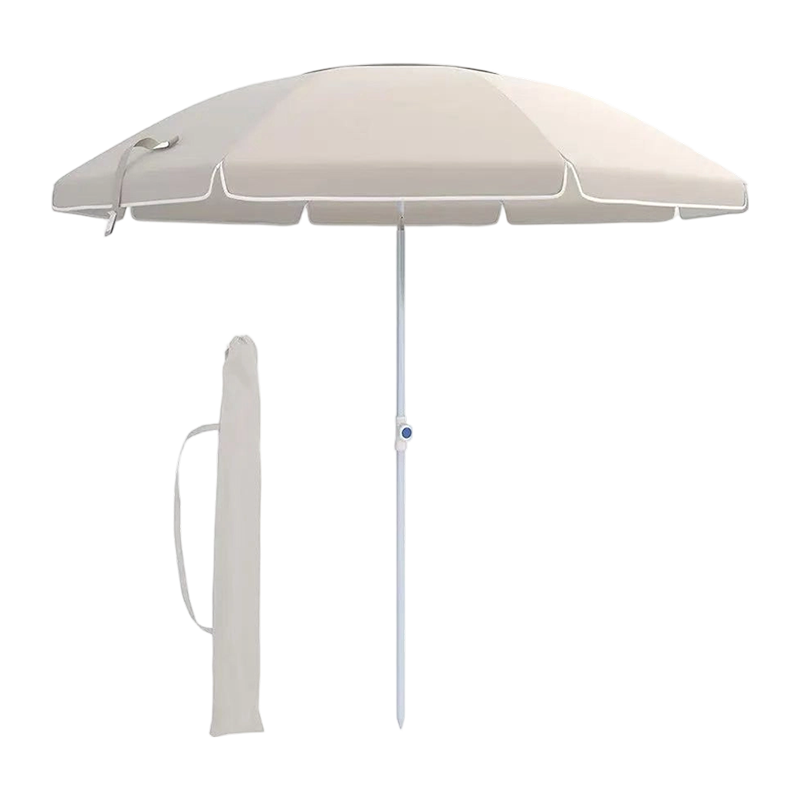
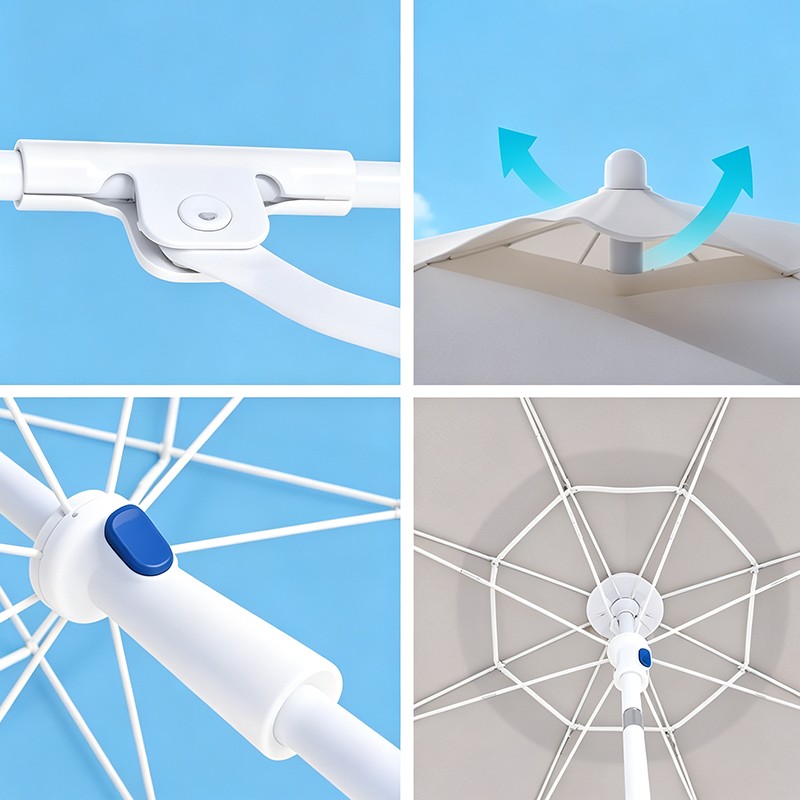 Fiberglass Rib Beach Umbrella with TiltA 2m beach umbrella with 5mm fiberglass ribs, steel pole, tilt, and vented 160G polyester canopy for checking frame and fabric details.View Product →
- Check whether the canopy has a vent or wind relief panel.
- Ask for fabric and coating details, not just a colour number.
- Compare rib material and pole diameter together.
- Review stitching, hub finish, and carry-bag construction.
A good beach parasol is a frame-and-fabric system, so do not approve the canopy without checking the pole, ribs, and anchor together.
How to Compare Beach Parasols for Wind, Shade, and Real Beach Use
Buyers often ask which feature matters most. A useful way to compare models is to score them against the same five criteria instead of judging canopy colour alone, especially when a supplier offers several beach parasol styles at different price points.
Relative planning weight for specification meetings, not a laboratory test score.
Use the chart as a conversation tool rather than a fixed formula. A parasol with excellent fabric but a shallow spike will still fail on a breezy afternoon, while a secure anchor can make a simpler canopy far more usable. For resort and rental buyers, setup speed and stability usually carry more weight than packed length. For consumer retail, matching colour, tassel details, and carry-bag comfort can support repeat sales, especially when the core frame is already sound.
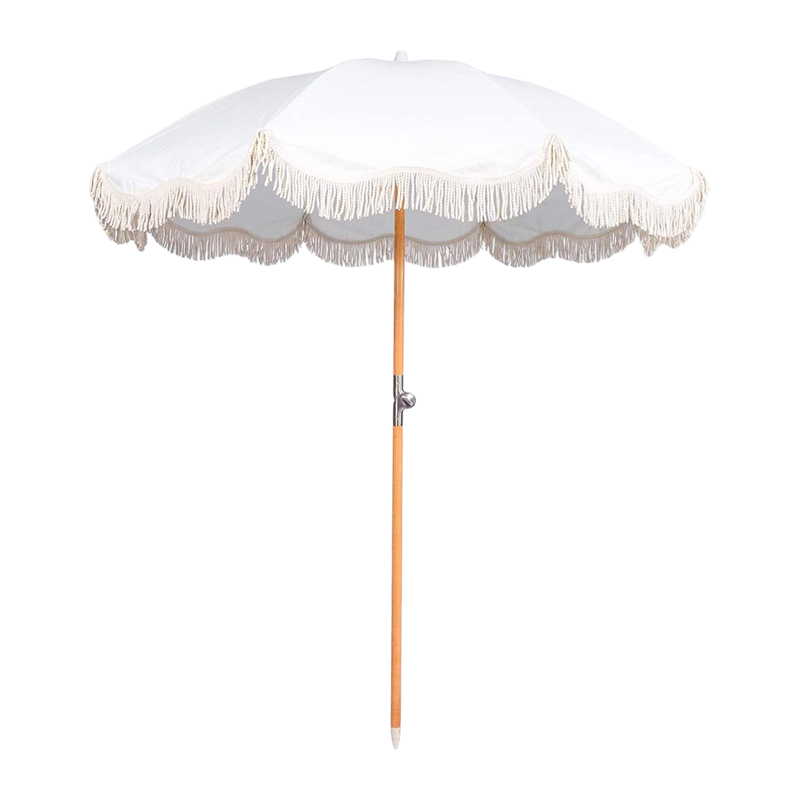
In our beach parasol range, fiberglass ribs and vented canopies are often more useful than adding ribs without improving the pole or anchor. Matching colour families and decorative details should sit on top of that foundation, not replace it.
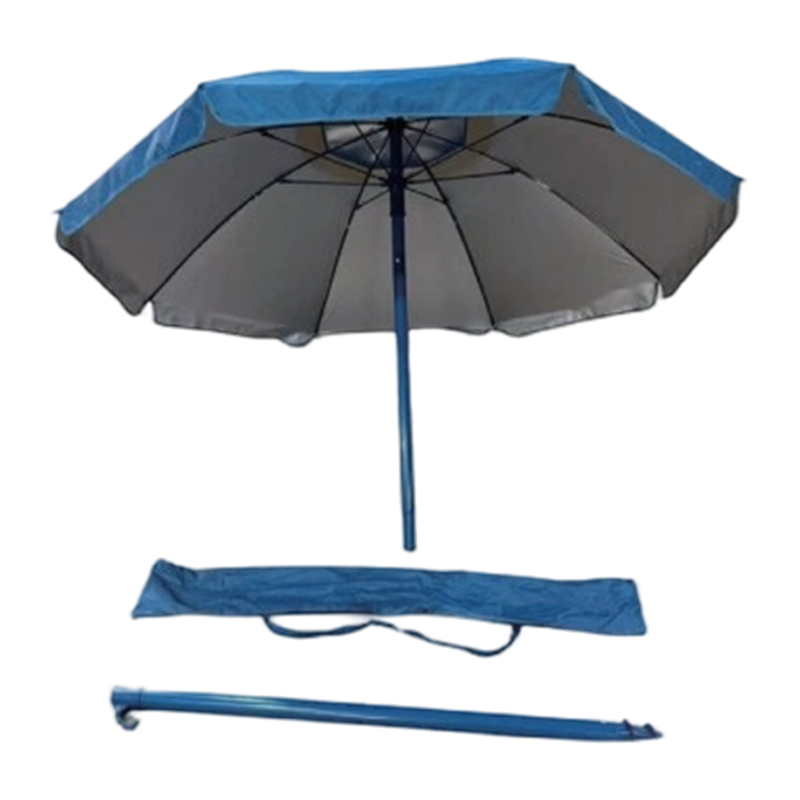 Matching Color Commercial Beach UmbrellaA color-coordinated commercial parasol with 210D silver-coated vented canopy, fiberglass ribs, and steel pole for unified outdoor shading programmes.View Product →
Compare beach parasols with one scoring sheet, because stable shade depends on the weakest part of the system, not the best-looking one.
For Retailers and Wholesale Buyers: What to Confirm Before Ordering
A beach parasol programme can look simple in a catalogue and become complicated at the container stage. Before placing a wholesale order, confirm the anchor system, canopy material, rib specification, packed dimensions, and how the product will be described to end customers. Ask whether the manufacturer can keep colour consistency across repeat orders, and whether packaging is designed for retail shelves, online delivery, or resort storage.
Our company profile lists a 9,000 sqm production base and more than 120 staff, with product development covering straight umbrellas, folding umbrellas, beach umbrellas, garden umbrellas, and gazebo-style canopies. That breadth helps a supplier or wholesaler build a beach and outdoor shade range without sourcing every style from a different factory. It also means sample review should focus on the exact model, not only a general category photo.
Useful next reads: review the company and factory background, then use the custom beach and patio umbrella sourcing guide to prepare specification questions.
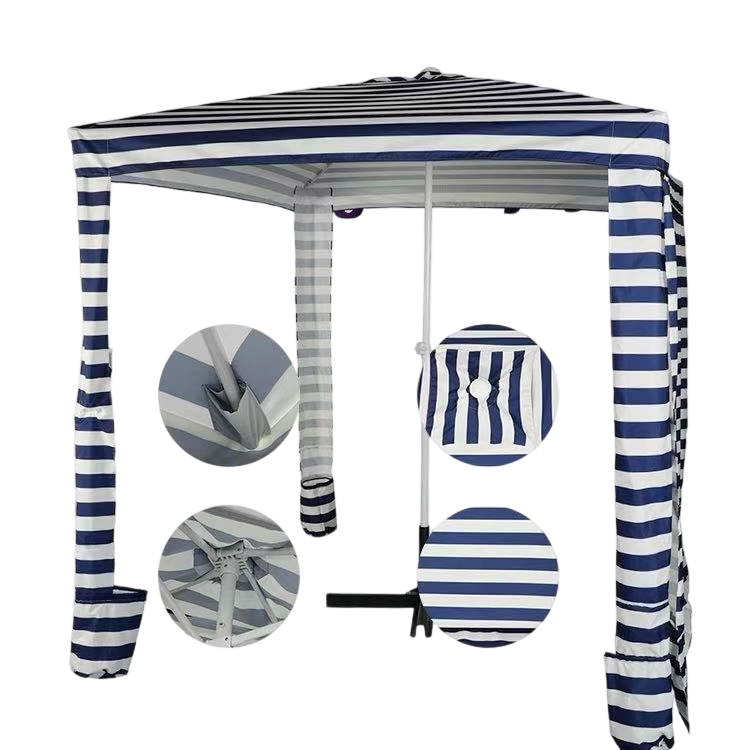
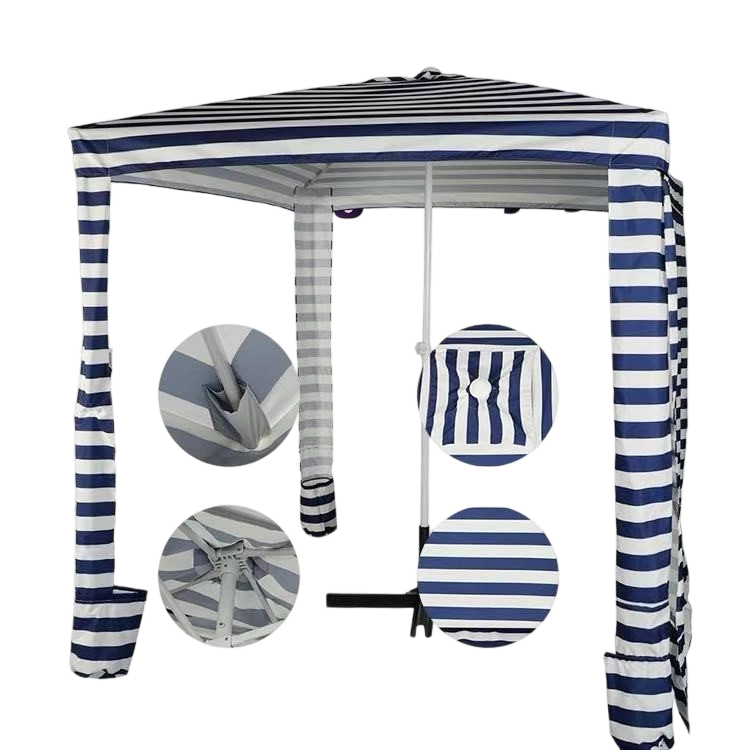 Square Beach Cabana with Reinforced Steel FrameA 1.8m square semi-enclosed cabana with reinforced steel frame and 160G polyester canopy for structured beach shade and privacy.View Product →
For wholesale beach parasols, approve the exact anchor, frame, fabric, and packing specification before discussing repeat volume.
Frequently Asked Questions About Best Beach Parasols
What should I look for in the best beach parasols?
Look first for a secure anchor and a vented canopy, then compare fabric shade, rib material, pole strength, and packed size. A parasol that is easy to carry but unstable in wind is rarely a good beach product.
Are fiberglass ribs better than steel for beach parasols?
Fiberglass ribs can flex and recover well in gusty conditions, but they still depend on hub quality and pole strength. Steel can be durable too; the important point is to compare the full frame rather than one material label.
How do I keep a beach parasol from blowing away?
Use an anchor suited to the sand, set it deep enough, and avoid leaving the canopy open unattended in strong wind. A sandbag base or auger helps, but correct setup and realistic wind limits matter just as much.
What fabric shade should a beach parasol offer?
Ask for fabric and coating details, including UV performance where available. Dense fabric, good stitching, and a consistent coating are more useful than a vague “sun protection” claim on a retail page.
Can I order beach parasols wholesale from a manufacturer?
Yes, but confirm the model specification, sample approval points, colour consistency, packaging, and inspection criteria. Working with an experienced manufacturer or supplier reduces the risk of receiving a visually similar parasol that performs differently on the beach.
The best beach parasols are specified around stability, shade, and repeatable production, not around a single catalogue photo.
Match the Parasol to the Buyer, Not Just the Beach
A family buyer may value a compact carry bag and quick setup. A hotel or rental operator may need a stronger anchor, easier cleaning, and a canopy that looks consistent across many units. A wholesaler needs clear specifications, stable colour ranges, and packaging that survives distribution. These are different buying jobs, even when the product category is the same.
That is why a practical beach parasol range works best when it offers a few clear performance levels rather than dozens of near-identical options. Use anchor type, canopy venting, fabric quality, and frame strength to separate the range. Then let colour and trim support the sale without hiding the engineering that keeps the shade standing.
Build the range around real beach conditions and buyer needs, and the right parasol becomes easier to recommend, sell, and repeat.

Contact Us
-
Add:
On the east side of Baisong Road in Songyuan District, Shaoxing City, Zhejiang Province -
Phone:
+86-18457587893 -
Email:
grace@qyumbrella.com
Send Inquiry
To Contact Us
Copyright © Shaoxing Shangyu Qianyu Umbrella Co., Ltd. All Rights Reserved.
