
 en
 日本語
 한국어
 русский


Industry News
 Home / News / Industry News / How to Set Up a Beach Umbrella: Sand Anchoring, Wind and Wholesale Tips
How to Set Up a Beach Umbrella: Sand Anchoring, Wind and Wholesale Tips
 2026.11.16
 Industry News
How to set up a beach umbrella is mostly a decision about stability, not a test of strength. The canopy size, pole diameter, sand anchor, wind vent, tilt angle, and the depth you bury the pole all work together. A large umbrella with a thin pole and no vent will feel unsafe even on a mild afternoon, while a smaller umbrella with a proper anchor and a low, vented canopy can stay useful in a steady breeze. The practical rule is to choose the umbrella for the sand and wind first, then set it up with a deep anchor, a controlled tilt, and a canopy that lets air move through rather than pushing the whole pole sideways.
On a beach, the ground changes within a few steps. Dry loose sand near the dunes behaves differently from wet packed sand near the waterline. That is why two people can follow the same instructions and get different results. One pole sinks and leans; another holds firm. The difference is usually not luck. It is the match between the umbrella, the anchor, and the sand condition. This guide explains the setup sequence, the common mistakes, and the product details wholesale buyers should check before ordering beach umbrellas for resorts, rental operators, retail programs, or private label ranges.
A beach umbrella stays stable when the pole, anchor, canopy, and wind vent are chosen as one system, not as separate parts.
Content
- 1 How to Set Up a Beach Umbrella: The Five-Part Decision
- 2 Match the Pole, Anchor, and Sand Before You Open the Canopy
- 3 Set the Canopy, Ribs, and Wind Vent Correctly
- 4 Step-by-Step: How to Set Up a Beach Umbrella in Sand
- 5 Tilt, Height, and Shade Coverage
- 6 How to Keep a Beach Umbrella From Blowing Away
- 7 Common Setup Mistakes and the Buyer Risk Behind Them
- 8 Wholesale Buyer Checklist for Beach Umbrellas
- 9 FAQ: Beach Umbrella Setup and Wholesale Questions
- 9.1 How deep should I set up a beach umbrella?
- 9.2 Do I need a sand anchor for every beach umbrella?
- 9.3 Can I use a patio umbrella at the beach?
- 9.4 What is the best umbrella setup for wind?
- 9.5 How do I choose a beach umbrella supplier or wholesaler?
- 9.6 What should I check before a private label beach umbrella order?
- 10 Final Word: Build the Setup Around the Conditions
How to Set Up a Beach Umbrella: The Five-Part Decision
Before opening the canopy, think in five parts: pole, anchor, canopy, tilt, and wind. The pole needs enough diameter and length to reach stable sand. The anchor needs a shape that grips rather than spins. The canopy needs a vent or a shape that reduces lift. The tilt needs to follow the sun without turning the umbrella into a sail. The wind conditions decide whether the umbrella should be lower, smaller, or taken down. When one part is weak, the others have to compensate, and that is when setup becomes frustrating.
The table below gives a simple planning view. It is not a substitute for testing on site, but it helps buyers and users ask better questions before the umbrella is opened. For wholesale programs, the same factors become specification points: pole diameter, rib material, canopy fabric, vent design, anchor compatibility, and packaging.
| Sand condition | What it does to the pole | Setup adjustment | Buyer check |
|---|---|---|---|
| Dry, loose sand | Pole slips and leans easily | Use a wider anchor, deeper burial, and lower canopy | Anchor compatibility and pole diameter |
| Wet, packed sand | Pole holds better but can be hard to push | Use a threaded stake or twist anchor and clear the hole | Stake strength and handle design |
| Shell or pebble mix | Pole can hit hard spots and stop short | Clear a small hole first and check the base | Rib durability and pole finish |
| Soft sand near dunes | Deep burying is easier but wind exposure is higher | Keep the canopy low and use a secondary anchor | Vent design and anchor bag quality |
A common mistake is to buy a beach umbrella by canopy size alone. A wide canopy gives shade, but it also catches more wind. For a family area with low wind, a larger canopy can be comfortable. For an open beach with steady crosswind, a smaller canopy with a strong pole and a vented top is often easier to manage. The right choice depends on how the umbrella will be used, who will set it up, and whether it will be left unattended.
Start with the sand and wind, then size the canopy; a larger canopy is not automatically a better beach umbrella.
Match the Pole, Anchor, and Sand Before You Open the Canopy
The pole is the first load-bearing part. A beach umbrella pole that is too thin may flex under wind, and a pole that is too short may not reach stable sand. As a general guide, a pole with a larger diameter and a thicker wall will feel more controlled, especially when the canopy is wide. The pole tip also matters. A simple pointed tip can push into soft sand, but it may not grip. A threaded stake or a screw-in anchor can hold better in packed sand because it creates a mechanical grip rather than relying on friction alone.
Depth is the next factor. There is no single depth that works everywhere, because sand density changes. A useful starting point is to bury the pole until the lower section feels firm, then test it by leaning gently before opening the canopy. If the pole moves easily, go deeper or change the anchor. If the pole hits a hard layer, clear a small hole and remove shells or stones rather than forcing it. Forcing the pole can damage the tip, bend the lower shaft, or create a loose pocket that will not hold.
For buyers sourcing beach umbrellas, pole and anchor compatibility should be checked as a set. A fiberglass beach umbrella may offer flexible ribs and a lighter feel, but the pole still needs a stable base. A folding beach umbrella may be easy to carry, but its shorter pole may need a different anchoring method. The setup instructions should match the product, not be copied from a different model.
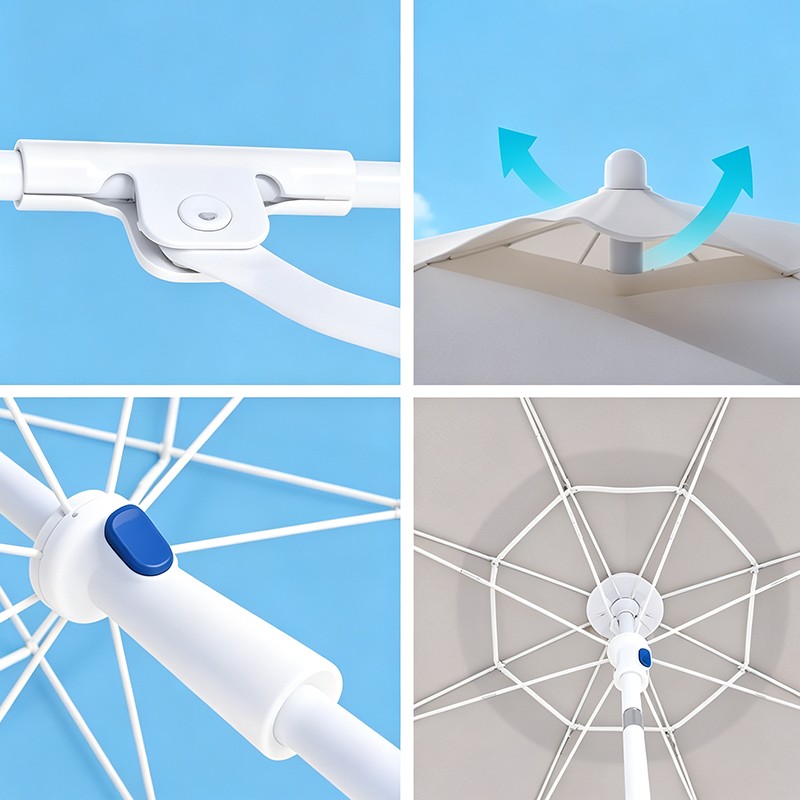 Fiberglass Beach Umbrella with Steel Pole and TiltThis model pairs fiberglass ribs with a steel pole and tilt, so buyers can check pole and anchor compatibility as a set.View Product →
Sand anchors come in several forms: auger-style stakes, sand bags, weighted bases, and fabric tubes that are filled on site. Each has a trade-off. Auger stakes are compact but depend on sand that can hold a thread. Sand bags are simple but add weight and bulk. Weighted bases work better on solid ground than in deep dry sand. Fabric tubes can be effective when filled properly, but they need enough fill and a tight closure. The setup should use the anchor that matches the beach, not the one that is easiest to pack.
Test the pole before opening the canopy; if the lower shaft moves, the anchor or depth is not ready.
Set the Canopy, Ribs, and Wind Vent Correctly
Open the canopy in a controlled way. If the umbrella is opened while the wind is already strong, the canopy can fill with air before the pole is fully seated. That puts stress on the ribs and can pull the pole sideways. A better sequence is to seat the pole, check the anchor, open the canopy low, and then raise it to the working height. Keep fingers and loose clothing away from the runner and rib joints during opening.
The wind vent is a small feature with a large effect. A vented canopy lets some air pass through the top, which reduces lift and makes the umbrella feel less like a sail. It does not make the umbrella windproof, and it does not replace an anchor. It simply reduces the pressure spike that occurs when a gust hits a closed canopy. Rib material also affects behavior. Fiberglass ribs can flex and return, while steel ribs may be stronger but can bend permanently under excess load. The right choice depends on weight, wind exposure, and how the umbrella will be stored.
Check the rib count and the hub. More ribs can support the canopy shape, but more joints also need good quality control. A beach umbrella that is easy to open but has loose rib tips will wear quickly in rental use. For private label or wholesale orders, ask for a sample setup check: open and close the umbrella several times, inspect the vent stitching, and confirm that the pole locks securely at the height you plan to sell.
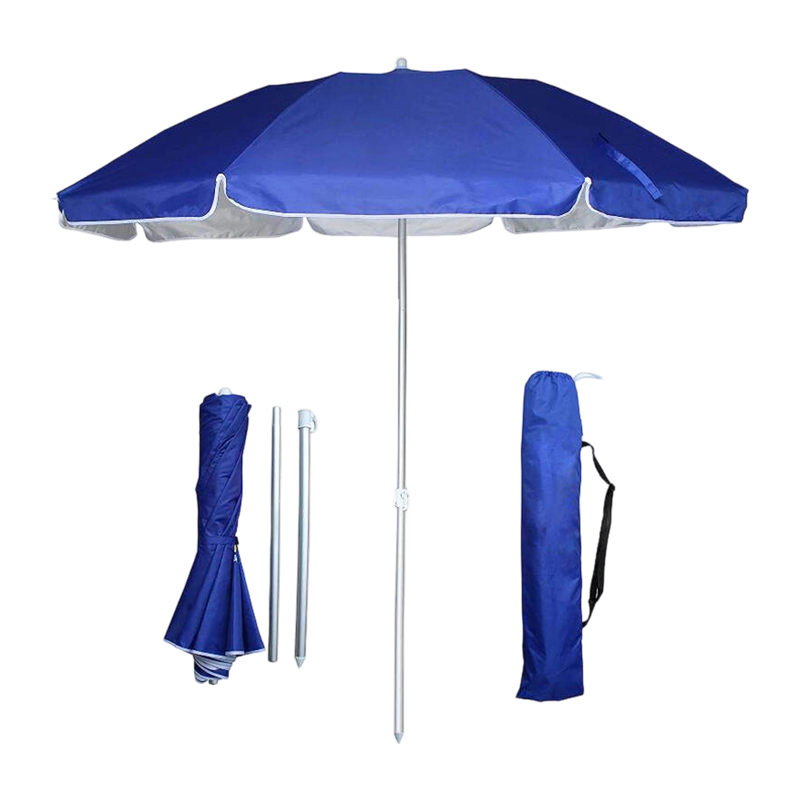 Two-Folding Beach Umbrella for Travel and CampingIts two-fold aluminum frame and silver-coated canopy suit portable beach and camping use, with shorter pole and separate anchor needs to confirm.View Product →
A folding beach umbrella can be a practical choice for travelers and small retail programs. The trade-off is that folding models often have shorter poles and lighter frames. They can work well in soft sand with a separate anchor, but they need clear instructions. Users should not assume that a compact umbrella can be set up exactly like a full-height beach umbrella. The pole length, anchor type, and canopy height should be explained on the packaging or in a simple setup card.
A wind vent reduces lift but does not replace anchoring; the canopy and the base must work together.
Step-by-Step: How to Set Up a Beach Umbrella in Sand
The following sequence works for most beach umbrella styles, but the anchor and pole details may change by model. Use it as a practical checklist rather than a rigid rule. If the wind is strong, stop before opening the canopy and choose a lower, more sheltered position.
- Choose a spot with steady sand and some natural wind protection if possible. Avoid spots directly behind loose dunes where sand can shift.
- Clear the surface of shells, sharp stones, and dry clumps. A small clear area helps the anchor sit evenly.
- Mark the pole position and check the sun direction. You want shade where people will sit, not a canopy that blocks the walking path.
- Push or twist the anchor into the sand first if the design uses a separate stake or auger. Keep it vertical at the start.
- Insert the pole into the anchor or directly into the sand, depending on the model. Push until the lower section feels firm.
- Test the pole by leaning it gently from two directions. If it moves, go deeper or add a second anchor point.
- Open the canopy while the umbrella is still low. Check that the vent is clear and the ribs are not twisted.
- Raise the canopy to the working height and set the tilt. Tighten any locking collar or pin.
- Add a sand bag or secondary weight if the beach is open and the wind is steady.
- Recheck the setup after a few minutes. Sand can settle, and a pole that felt firm at first may loosen.
If the umbrella has a tilt mechanism, set the tilt after the pole is secure. Tilting before the base is stable can put uneven load on the pole. Also avoid over-tilting. A strong angle may improve shade for a short time, but it raises the canopy profile and can increase wind load. A moderate tilt is usually easier to manage than an extreme one.
Seat the pole, test it, open low, raise slowly, then tilt; this order prevents most setup failures.
Tilt, Height, and Shade Coverage
Shade coverage changes with the sun angle, the canopy shape, and the height of the pole. A high canopy gives more headroom, but it also exposes more surface to wind. A low canopy gives less headroom but can be more stable. For family use, a low-to-medium height with a moderate tilt often gives a better balance than a fully raised canopy. For rental operators, clear height markings on the pole can help staff set the same height each time.
The tilt mechanism should lock firmly. A loose tilt joint can let the canopy drift during the day, and that movement can loosen the pole. Check the joint before and after adjustment. If the umbrella will be used by different people, choose a mechanism that is simple to operate and hard to leave half-locked. A beach cabana or gazebo-style canopy can provide broader shade for groups, but it also needs a more deliberate anchoring plan because the larger roof area catches more wind.
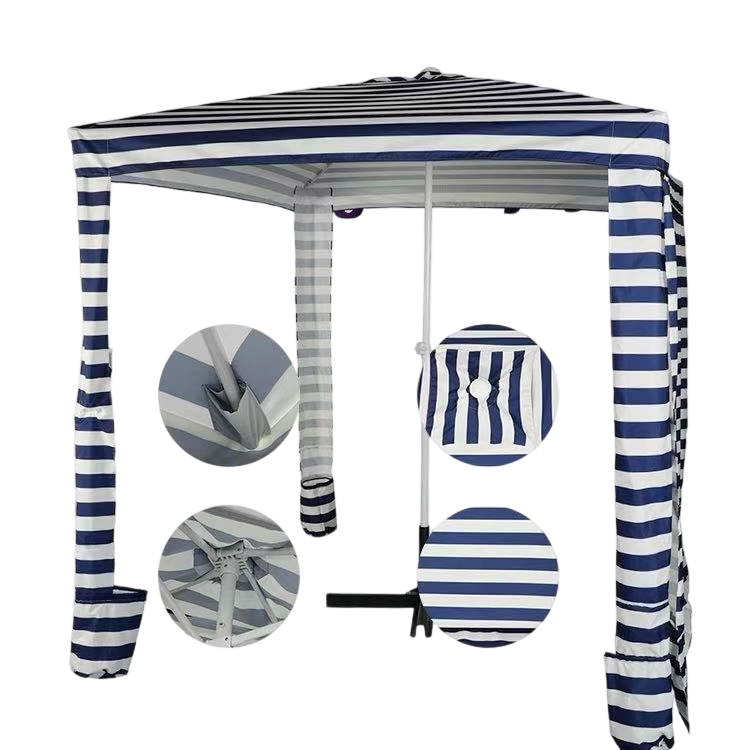
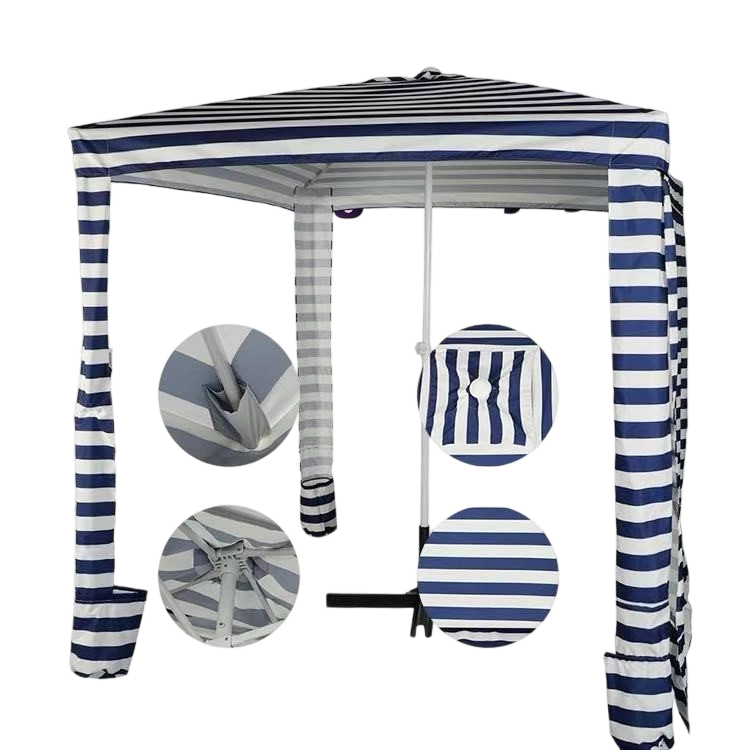 Square Beach Cabana with Reinforced Steel FrameThis 1.8m square cabana provides structured shade and privacy for resort loungers or two-person seating, with a reinforced steel frame and 160g polyester canopy.View Product →
Shade is not only about the canopy width. The position of the pole matters. If the pole is placed at the edge of the seating area, the canopy can cover more usable space. If it is placed in the middle, people may sit around it but lose usable shade. For resort or rental programs, it helps to define a few standard layouts so guests do not move the umbrella into a crowded path or against a service area.
A moderate tilt at a stable height gives better usable shade than an extreme angle that raises wind load.
How to Keep a Beach Umbrella From Blowing Away
Wind is the main reason beach umbrella setups fail. A canopy that looks calm can lift suddenly when a gust hits. The first defense is not a heavier base alone; it is a combination of a deep anchor, a vented canopy, and a low profile. The second defense is behavior. Do not leave an umbrella open and unattended in rising wind. Take it down, lower it, or close the canopy before the wind builds.
Use a secondary anchor when conditions are uncertain. A sand bag placed over the lower pole or a fabric anchor filled with sand can add resistance. Guy lines can help, but they also create trip hazards on a public beach, so they need visible placement and careful planning. For commercial operators, a simple wind policy is more reliable than asking staff to judge each situation differently. For example, close canopies when wind reaches a set level, and store them in a safe area rather than leaving them in the sand.
Product design matters here. A strong pole, secure rib joints, and a canopy with reinforced stress points will tolerate more handling, but no beach umbrella should be treated as storm-safe. Buyers should ask for setup and takedown instructions that match the product, especially for larger canopies, cabana styles, and garden umbrellas used near coastal properties.
No anchor makes an open beach umbrella storm-safe; lowering or closing the canopy is part of proper setup.
Common Setup Mistakes and the Buyer Risk Behind Them
Most beach umbrella problems repeat in predictable ways. The chart below is a planning aid based on common field complaints and buyer questions, not a laboratory test. It shows where setup attention tends to be weak, so users and wholesale buyers can focus on the most useful checks first.
Common weak points in beach umbrella setup
Loose sand around pole
42 percent
Pole inserted too shallow
31 percent
Canopy caught by wind
18 percent
Poor tilt or height choice
9 percent
The chart points to a simple conclusion: most setup risk starts at the base. If the sand is loose and the pole is shallow, the canopy is already working against a weak foundation. That is why a supplier should be able to explain anchor compatibility, pole diameter, and canopy venting together. A product catalog that lists only canopy size and color leaves buyers to guess at the details that affect returns and guest complaints.
Another common mistake is opening the canopy before the pole is stable. Once the canopy fills with air, it becomes harder to correct the base. A third mistake is leaving a tilt joint half-locked. The canopy may seem fine at first, then shift after a few minutes. A fourth mistake is using a patio base in deep sand. Patio bases are designed for hard surfaces, not for loose beach sand, and they can sink or tip under load.
Fix the base and pole first; most canopy problems are symptoms of a weak or shallow setup.
Wholesale Buyer Checklist for Beach Umbrellas
For a retailer, resort supplier, rental operator, or private label buyer, the setup question becomes a specification question. A beach umbrella manufacturer or wholesaler should be able to confirm pole diameter, pole length, rib material, rib count, canopy fabric, vent design, tilt range, anchor options, and packaging. These details affect how the product is used, how it is stored, and how many support requests it creates after sale.
Ask for a setup sample, not only a catalog photo. Open and close the umbrella several times. Check the locking collar, the runner, the rib tips, and the vent stitching. If the product is sold with an anchor, test the fit between the anchor and the pole. A loose fit can allow the pole to spin or lean. For folding beach umbrellas, confirm the packed length and the pole sections, because a short pole may need a different anchoring method than a full-height model.
Quality control should cover more than appearance. Check canopy tension, seam direction, rib end caps, and the finish on the pole. For coastal rental use, look for reinforced stress points and simple replacement parts where possible. For retail programs, packaging should include clear setup steps, a wind warning, and a note that the umbrella should be closed or lowered when unattended. For OEM and private label orders, confirm label placement, instruction language, and carton markings before production.
The company profile behind this site describes a production base of 9,000 square meters, 120-plus employees, reported production volume of 5 million units, and export volume of 1 million units. For buyers, those figures are useful context when discussing capacity and product range, but they should still be matched with sample checks, order specifications, and delivery terms. A supplier with a broad umbrella range can support beach umbrellas, garden umbrellas, folding umbrellas, and cabana styles, but the buyer still needs to define the exact setup, anchor, and packaging requirements.
Wholesale and OEM support: review the factory and production base or send your beach umbrella brief for product, anchor, and packaging requirements.
Buy beach umbrellas by setup system: pole, anchor, vent, tilt, and instructions should all be specified before order.
FAQ: Beach Umbrella Setup and Wholesale Questions
How deep should I set up a beach umbrella?
Push the pole until the lower section feels firm, then test it by leaning gently from two directions. In loose sand, go deeper or use a wider anchor. In packed sand, a threaded stake may hold with less depth. There is no universal depth because sand density changes, so the test matters more than a fixed number.
Do I need a sand anchor for every beach umbrella?
Not every umbrella requires a separate anchor, but every beach umbrella needs a stable base. If the pole is short, the sand is loose, or the canopy is wide, a sand anchor or secondary weight is strongly advised. A vented canopy helps with lift, but it does not replace a proper base.
Can I use a patio umbrella at the beach?
A patio umbrella can provide shade, but its base is usually designed for a hard surface. In deep sand, a patio base may sink or tip. If a patio umbrella is used near a beach, it needs a beach-specific anchoring plan and close attention to wind. It is not a direct substitute for a beach umbrella with a suitable pole and anchor.
What is the best umbrella setup for wind?
Use a strong pole, a vented canopy, a deep anchor, and a low height. Add a secondary anchor if the beach is open. Close or lower the canopy when the wind rises or when the umbrella is unattended. No setup makes an open umbrella safe in strong wind.
How do I choose a beach umbrella supplier or wholesaler?
Check product range, pole and rib specifications, anchor options, sample quality, packaging, and communication. Ask for setup instructions that match the model. A supplier that can explain how the umbrella is anchored and used is usually better prepared for wholesale, OEM, and private label programs than one that offers only a canopy photo and a price.
What should I check before a private label beach umbrella order?
Confirm pole diameter and length, rib material, canopy fabric, vent design, tilt range, anchor compatibility, label placement, instruction language, carton markings, and sample approval. Also confirm the wind warning and care instructions. These details reduce returns and help retail or rental staff explain the product correctly.
The best beach umbrella setup is the one that matches the sand, the wind, and the user, with instructions that are clear before the first use.
Final Word: Build the Setup Around the Conditions
Setting up a beach umbrella well is not about pushing harder. It is about reading the sand, choosing the right anchor, keeping the canopy low until the base is secure, and using the vent and tilt with some restraint. A beach umbrella that is matched to its conditions will feel calmer, last longer, and create fewer problems for the person using it and the business selling or renting it.
For wholesale buyers, the same logic applies. Specify the full setup system, test a sample, and ask for instructions that real users can follow. Whether the order is for beach umbrellas, folding models, garden umbrellas, or cabana-style canopies, the product should be presented with the pole, anchor, canopy, and wind behavior in mind. That is how a simple shade product becomes a reliable part of a coastal or outdoor program.
Set up the base first, control the canopy second, and treat wind as a condition to manage rather than a problem to ignore.

Contact Us
-
Add:
On the east side of Baisong Road in Songyuan District, Shaoxing City, Zhejiang Province -
Phone:
+86-18457587893 -
Email:
grace@qyumbrella.com
Send Inquiry
To Contact Us
Copyright © Shaoxing Shangyu Qianyu Umbrella Co., Ltd. All Rights Reserved.
